


Knowing how to drain an electric water heater tank requires knowledge from the homeowner, as sediment will settle on the bottom of the tank.
Just relax. According to Plumb Hero, you can do this on your own using simple tools.
In this guide, we’ll walk through the tools you need, easy step-by-step instructions, and what to do if you run into a stuck drain valve.
Key Takeaways
- Unplug your electric water heater before you start draining.
- Wait until the water temperature is cool enough before draining.
- Draining the tank will help you get rid of any dirt that might be inside.
- Check the manufacturer’s guidelines about how often you should drain your tank.
Why You Should Drain an Electric Water Heater Every Year
Over time, particles and deposits will settle on the bottom of the water tank to create sediment that will serve as an insulator and make it difficult for the heater to heat the water.
The water trapped beneath the sediment makes some rumbles, and this exerts pressure on the tank. The water heater tank is recommended to be drained every year for optimal operation and to avoid any wear on the components.
Here Are the Basic Tools You Need Before You Start
Before beginning the task of draining your electric hot water heater, gather a few basic tools. It is always better to be prepared to make things easier for yourself.
So before you start draining your electric water heater, collect a few basic tools. To make things easier for yourself, it is best to ensure that everything is in place beforehand.
- Garden Hose: Use the conventional garden hose to transfer the water from the drain valve to the floor drain or any other suitable drainage point.
- Bucket: Keep a bucket nearby to catch any remaining water or small spills.
- Flathead Screwdriver: Not all valves on water heaters are metal; some of them may be made of plastic and require a flathead screwdriver.
- Work gloves: Use work gloves for protection from hot water and sharp edges near the water heater.
Tip: Make sure your garden hose is long enough to reach your drainage area before you begin.
How to Drain an Electric Hot Water Heater? (7 Easy Steps)
Draining an electric water heater may seem like a difficult job, but it’s manageable if you follow the right steps. Before you begin, make sure you have your tools ready and take the necessary safety precautions.
Step 1: Please First Turn Off the Power at the Circuit Breaker
Before you do anything else, turn off the power supply to your electric water heater at the circuit breaker. This is important because the heating elements can get damaged if they operate without water inside the tank.
If you are unsure which breaker controls the heater, check the electrical panel or ask an electrician for help.
Step 2: Then Shut Off the Cold Water Supply Line
Look for the valve through which the water flows into the heater. Close this valve to prevent water from flowing into the heater during draining.
Step 3: Just Wait and Let the Water Cool Down
If the heater was switched on not long ago, then the water is extremely hot. Allow time for the water to cool down before attempting to drain it, because the water can scald you severely.
Step 4: Then Connect a Hose to the Electric Water Heater Drain Line
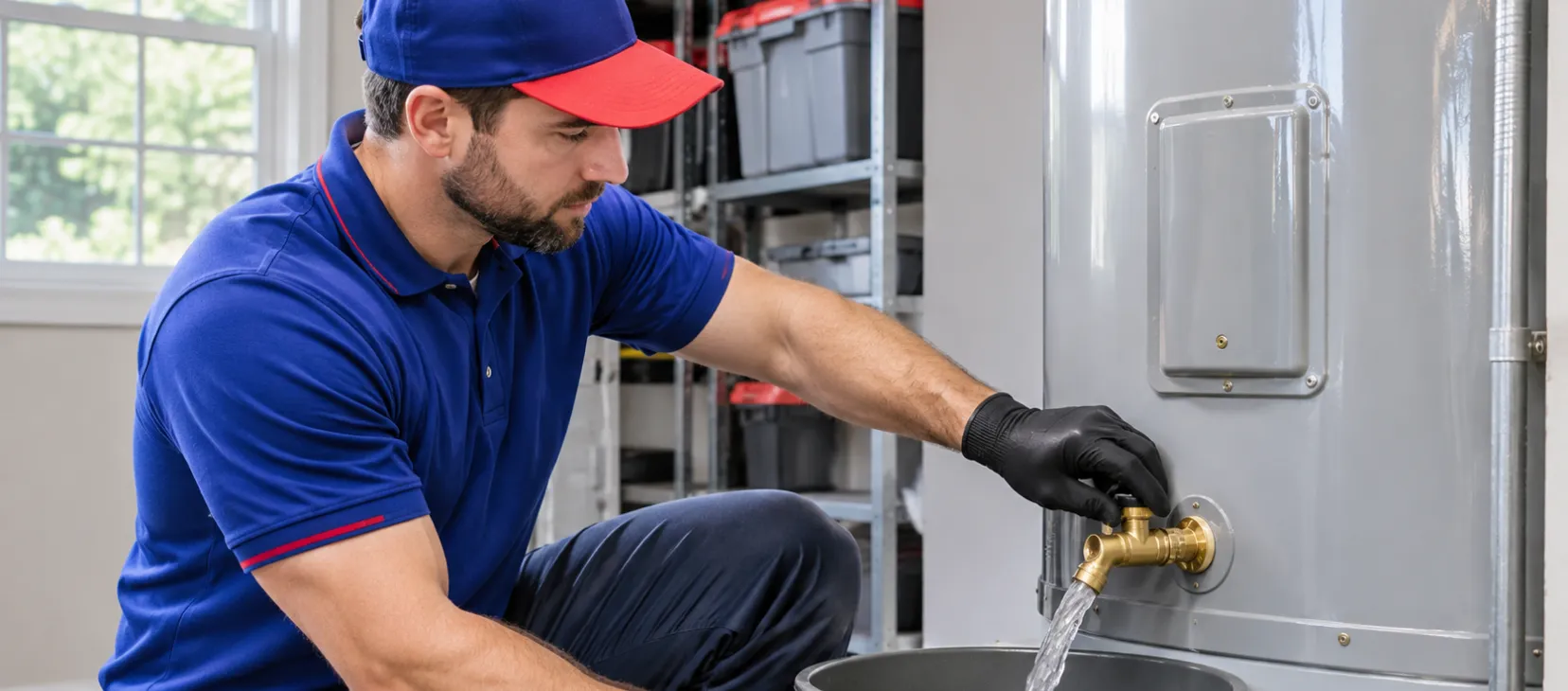
Look for the drain valve located at the base of the water heater. Hook a garden hose into the valve and direct the other end toward the floor drain or the outdoors.
Step 5: Open the Drain Valve and T&P Relief Valve
Gently open the drain valve until water starts flowing from the hose. If there is a slow flow of water, ensure that there is an open valve with hot water to introduce air.
Step 6: Flush Out Leftover Sediment With Cold Water
Once most of the water in the tank has been drained, open the cold water tap again for one minute to agitate and flush out any remaining dirt in the tank. This should be done until the water coming out of the hose is clean.
Step 7: Close the Valve, Refill the Tank, and Restore Power
When the sediment has been flushed out, shut off the drain valve and remove the garden hose. Restore the flow of cold water to fill the tank again, and leave a hot water tap running until there are no more air bubbles in the flow of water.
Note: The electric supply should not be restored until the tank is full to the brim and there is no more air in the hot water supply lines.
Stuck or Clogged Electric Water Heater Drain Valve? Here’s What to Do?
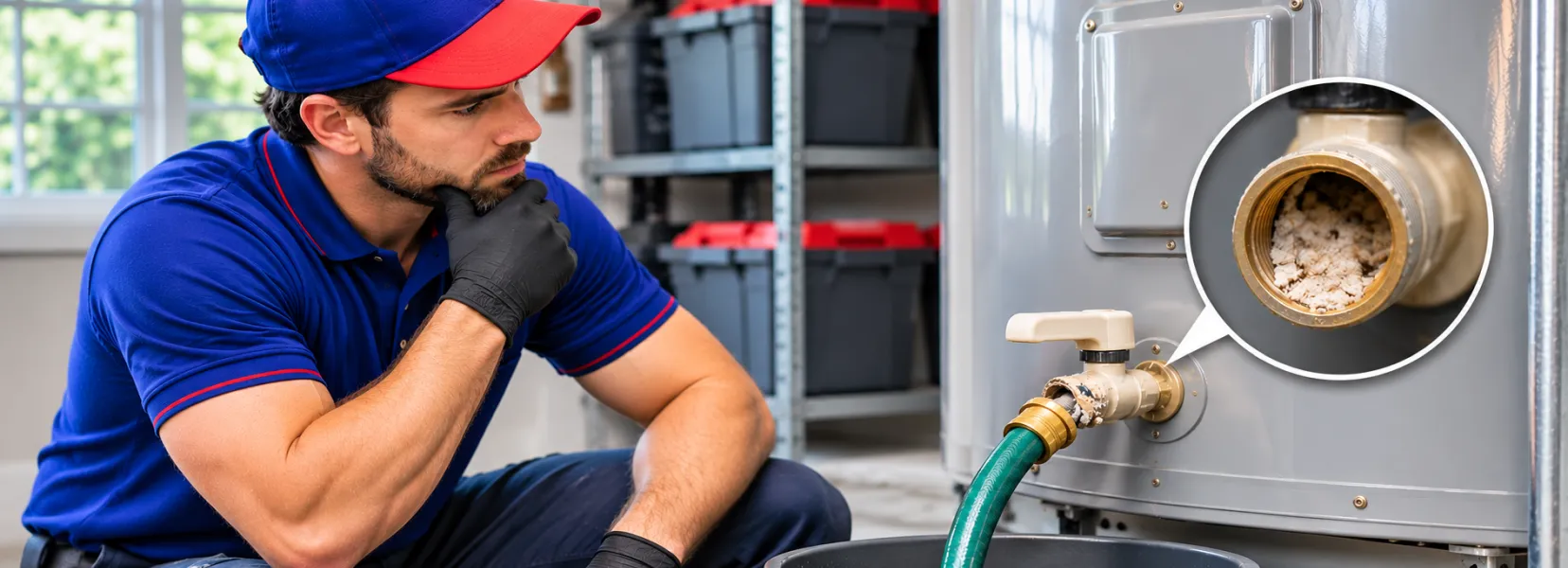
Other times, water does not flow even when the valve is open. This is due to the collection of sediment that blocks the valve opening. The older hot water tanks contain plastic valves that are difficult to open.
In such a case, avoid using too much force on the valve, as it may break or cause water leakage from the tank.
Here are a few things you can try:
- Hose Check: Ensure that there is no kink or blockage in your garden hose. On occasion, the issue lies with the hose and not the drain valve.
- Air Intake in the Tank: To get air inside the tank, you should open a hot water tap close to you. This helps water flow out from the tank with ease.
- Sediment Blockage: Should the valve be open but still there is no water flowing out, sediment is likely blocking the valve opening. Be careful not to use sharp objects on the valve.
- Avoid forcing a stuck valve: If it doesn’t move at all, then do not apply any pressure, particularly if it is an older plastic valve, which is susceptible to cracking.
- Consider calling a plumber: If the valve remains clogged, fails to close properly, or begins to leak, then it should be examined by a professional.
One important thing to remember: If your drain valve is damaged or leaking, don’t continue flushing the tank. A plumber can determine whether the valve needs cleaning or replacement.
DIY Drain vs. Calling Plumb Hero: When to Get Professional Help
While learning how to drain electric water heater systems is simple for most homeowners, some situations require professional service. If you observe any of these issues, you must seek professional help.
- Leaking drain valve: When water continues to leak from your drain valve after closing it, it should be fixed or replaced.
- Rusty appearance: Rust-colored or discolored water could indicate internal corrosion in the tank.
- Old Water Heater: Your water heater should be checked if it has exceeded 10 years of age.
- Valve is stuck: Do not force a valve that will neither open nor close.
- Unusual problems: It is better to contact a plumber if you doubt any action.
For anyone who is experiencing any of these issues, Plumb Hero can assist. Feel free to contact us and we will take care of your water heater maintenance needs.
We also invite you to read through our Water Heater Maintenance Services.
FAQ’s
1. How often should you drain an electric water heater?
In most cases, it is recommended that you drain your electric hot water heater once per year. However, make sure to look at your tank’s manual, because sometimes it requires more frequent draining.
2. How long does it take to drain an electric water heater?
An emptying operation for a hot water tank using electricity should take approximately 30 to 60 minutes. The factors that affect the time include tank size, water flow rate, and amount of sediment.
3. Can you drain an electric water heater without turning off the breaker?
NO, you must ensure the circuit breaker is turned off when draining an electric hot water heater to avoid damaging the heating element.
4. Why is my electric water heater making a popping noise?
Most of the time, popping occurs due to the accumulation of sediment at the bottom of the water tank. Sediment acts as an insulator for water, which causes water to make a popping sound when heated.
5. How to adjust temperature on electric water heater after draining?
Turn off the electricity at the circuit breaker. Remove the small side panel from the water heater. Turn the thermostat dial using a flathead screwdriver. It is advised that you set the thermostat to 120°F.