


A home water purification system purifies dirty water from taps by removing harmful chemicals, germs, and dirt. If you are in search of the best water purification system or water purification system for home, there are many factors to consider, like your source of water, number of people and the nature of water problems.
According to the design of your house, your home water purification system can purify all the water coming into your home or at your kitchen sink.
What Is a Home Water Filtration System and How Does It Work?
A home water filtration system is a setup connected to your home’s pipes that cleans incoming tap water before you use it.
Water filters remove impurities in the water through screens and certain cleaning elements.
As the water passes through the filter, all the dirty elements such as sand, rust, chlorine, and metal are removed by being trapped in the small holes.
Types of Home Water Filter Systems (Where They Are Installed)
This guide will help you understand your requirements regarding the difference between point-of-entry and point-of-use filtration.
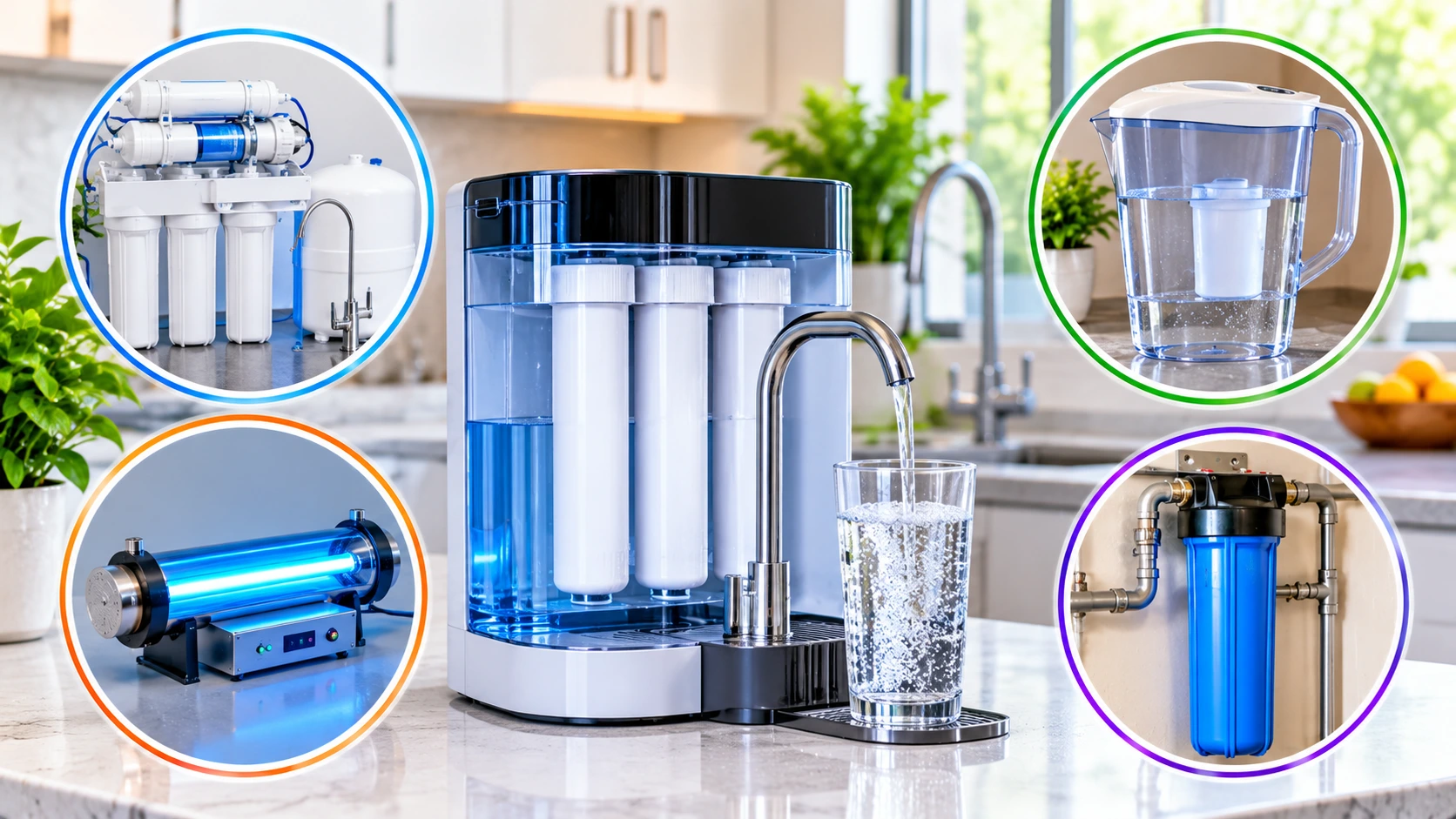
- Whole House Filters (Point-of-Entry or POE): The connection is made to the main water line, where it provides filtration to all water in the house. It protects plumbing, appliances, showers, and faucets from sediments, chlorine, and scaling.
- Under-Sink Filters (Point-of-Use or POU): They are fitted under the sink and filter water for only one faucet.
- Countertop filters: The filters are placed beside the kitchen sink and fitted onto the faucet to provide instant filtration of your drinking water.
For complete home coverage, explore water filtration systems to find a water purification system for home tailored to your layout.
RO vs. UV vs. Multi-Stage: Which Water Filter Tech Do You Need?
These three filters work differently. RO filter will help remove small particles like metals and chemicals from water, the UV filter eliminates harmful bacteria, and the Multi-Stage filter will get rid of dirt and that bad smell of chlorine in your tap water.
Therefore, this one is the right choice for you, and your home water purification system will depend on the water source and quality of your tap water.
Reverse Osmosis (RO) Systems (And Why You Need Remineralization)
In the process of reverse osmosis (RO) water filtration, pressure forces water to pass through an extremely thin membrane that is around 0.0001 micrometers thick.
The membrane separates all of the small impurities, metals, and dissolved elements.
However, most reverse osmosis membranes filter out some useful minerals such as calcium and magnesium, making the water slightly acidic.
This issue can be solved with an additional alkaline remineralization filter.
UV Water Purification for Bacteria and Well Water
The UV water purification light destroys the DNA in living organisms; therefore, bacteria, viruses, and parasites can be made harmless without the use of chemical disinfectants.
- Best Application: Essential for unchlorinated water sources. For a full guide on private well systems, read the well water filtration guide.
Multi-Stage Whole-House Water Filters
Whole House Water Purification Systems have the following stages:
- Pre-filter: This removes particles, sand, sediment and rust from pipes.
- Carbon Block Filter: Eliminates chlorine, chemicals, odors and volatile organic compounds (VOCs).
- Special media: Targets hard water mineral deposits and heavy metals.
City Water vs. Clean Water Needs: Which Filter Do You Need?
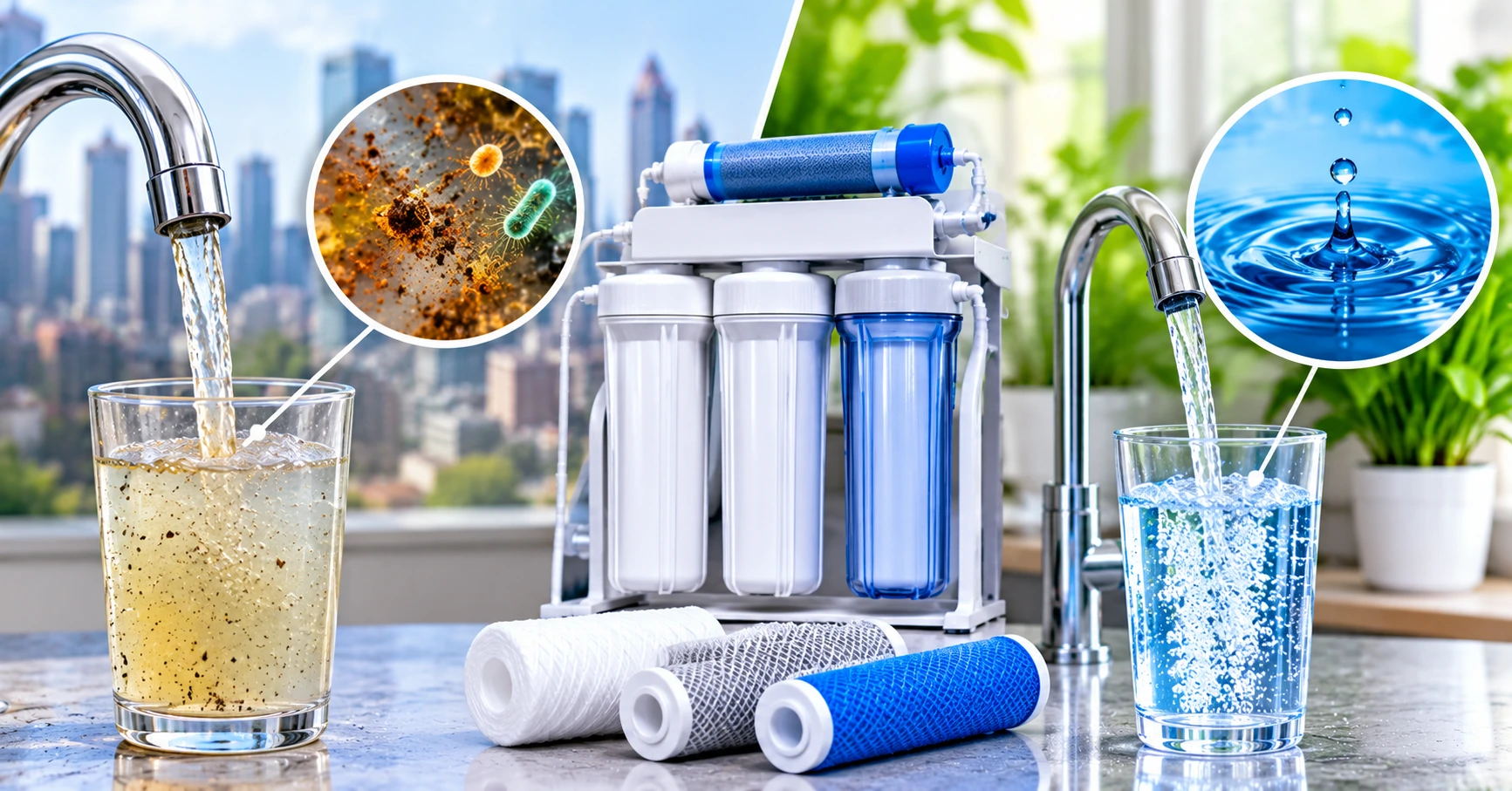
The filter difference arises from the fact that there are different challenges in the way water purification tablets expire from the two sources; therefore, there is a need to use different filters for the removal of contaminants in each of them.
The city water has been subjected to chlorination; hence, it requires the use of carbon filters to remove odors and metal ions.
City Water Problems (Chlorine, Chemicals & PFAS)
For instance, in city water treatment plants, chlorine or chloramines are added to disinfect the water from bacteria.
These chlorine and chloramines can cause the shower water to have a strong odor due to the gases released by them.
- This can be solved by getting a whole house water filtration system for the tap water and an under-the-sink RO filter.
Clean Water & Unfiltered Tap Issues
Raw water has minerals such as iron and manganese that will result in orange staining and hardness, which is likely to affect your water heater. The raw water could also have bacteria from the soil.
- Solution: Filter the water using a pre-filter, iron filter, and UV light.
Important Water Filter Certifications (NSF 42, 53, 55, 58)
Always check the product packaging for independent testing standards to confirm a filter performs as advertised:
- NSF/ANSI 42 (Taste & Odor): Enhances water taste and clarity while reducing chlorine odors.
- NSF/ANSI 53 (Health Effects): Filters out health-hazard contaminants like lead, mercury, VOCs, and parasites.
- NSF/ANSI 55 (UV Treatment): Verifies UV light performance in killing bacteria, viruses, and cysts.
- NSF/ANSI 58 (Reverse Osmosis): Certifies RO units for TDS reduction, heavy metals, and fluoride removal.
Why DIY Water Filters Cause Low Shower Pressure
Ever installed a home water purification system DIY filter only to find your shower pressure ruined? That happens because standard DIY filters restrict water flow.
If a filter isn’t rated for your home’s specific flow rate (GPM), water can’t pass through fast enough. A professional setup ensures your filter removes contaminants without cutting down your water pressure.
How Incorrect Filter Sizing (GPM) Drops Home Water Pressure
Every filter cartridge will have an upper limit of gallons per minute (GPM). If a household requires 12 GPM and a tiny filter that can only pass 5 GPM is installed to the main pipeline, then the flow rate will reduce for every shower, sink, and washing machine at the same time. Filter cartridges tend to restrict flow rate naturally as well.
Why Professional Plumber Installation Prevents Leaks and Pressure Loss
Plumbers from The Plumb Hero who have been licensed measure the total amount of water required for your house during its peak time, the diameter of the pipe and the overall water pressure. This will ensure proper filtration without loss of water pressure in the shower.
Avoid water pressure problems and installation leaks. Get professional water filtration system installation from The Plumb Hero.
Schedule Professional InstallationHow Much Does a Home Water Filter Cost?
Budgeting for a home water purification system requires looking at initial equipment costs alongside routine maintenance.
| Filter Setup Type | Average Equipment Cost | Professional Install | Annual Filter Maintenance |
| Under-Sink RO System | $250 – $600 | $150 – $300 | $80 – $150 / year |
| City Whole-House System | $800 – $2,200 | $400 – $900 | $150 – $300 / year |
| UV Sterilizer Unit | $500 – $1,200 | $250 – $500 | $100 – $200 / year (Lamp) |
Real Equipment Costs vs. Professional Plumbing Costs
Basic single-tap filtration systems cost about $250, while high-end whole-house systems could reach $2,200.
By having The Plumb Hero install your water filter system, you are assured of proper installation of bypass valves, electrical grounding, and plumbing code compliance.
Annual Filter Replacement Expenses
The filter cartridges must be changed in a timely fashion in order to prevent the growth of bacteria as well as ensure proper water flow.
The sediment pre-filters require changing every 3-6 months, the carbon filters every 6-12 months, and the RO membrane every 2-3 years.
Emergency Water Purification: How to Stay Safe When Filters Stop Working?
Main line disruptions or power failures can leave you without clean tap water. Here are the most reliable ways to handle an emergency:
- Boiling water: The simplest way to clean the water; it kills bacteria and viruses when power is available
- Gravity filters: When you’re without electricity or water pressure, they can strain out contaminants.
- Water Purification Tablets: A compact solution using chlorine dioxide or iodine for emergency storage kits
Frequently Asked Questions
How do I choose a whole house water filter?
Testing your tap water to see what contaminants may be in the water and identifying the highest water usage in gallons per minute will determine what type of system to buy.
How much does a whole house water filter cost?
A whole house water filter system typically costs between $800 and $2,200 for the equipment, and installation fees from a plumber cost between $400 and $900, depending on the layout of the pipes.
How to purify well water for drinking?
Combine a multi-stage sediment and iron filter with a UV lamp to kill microbes, then pass drinking water through an under-sink reverse osmosis water system unit.
What water filters remove PFAS?
Activated carbon block filters and Reverse Osmosis (RO) systems certified under NSF/ANSI 53 or 58 effectively remove PFAS “forever chemicals” from your drinking water.
Is an RO system good for health?
RO systems remove harmful heavy metals, chemicals, and toxins. Add a remineralization filter to your RO system to ensure that there is an optimal mineral content and pH balance in your drinking water.
Protect Your Home’s Water Quality Today With Plumb Hero
When you are going to purchase a home water purification system, you must think about your water source, home design, and specific water issues.
Whether you need a whole-house carbon filter to remove city chlorine or a UV system to keep well water safe from bacteria, proper sizing and expert maintenance make all the difference.
Ready for clean, safe water purification services at every tap? Contact The Plumb Hero today to schedule a full water test and get the perfect system installed for your home.