



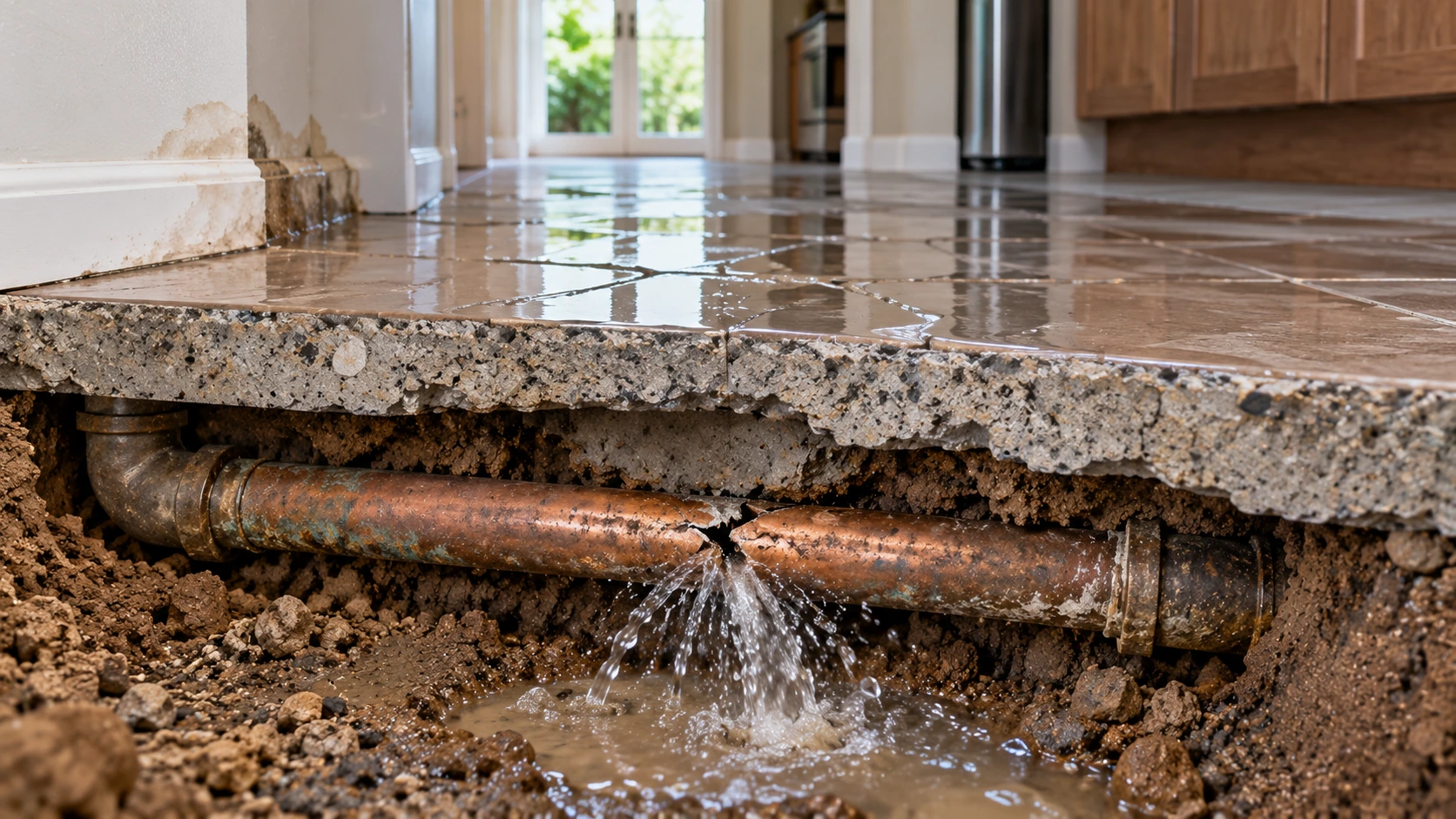
Your water bill went up by forty dollars, but everything was still the same in your household. Your flooring area gets warm when you walk on it without wearing socks. Your ears catch the sound of water leaking at 2 AM when all the faucets are turned off.
These three signs altogether indicate that there is a plumbing leak in your slab foundations.
A plumbing leak in slab piping is quite distinct from other household plumbing problems in a number of aspects, specifically because it is covered or buried within concrete. You only realize its presence once the water reaches a level where it can make its appearance.
This article will talk about the signs, the meter test, the causes, possible solutions to a water leak under your concrete slab foundation and how the insurance company will take care of the bill.
Quick Answer
A plumbing leak in a slab occurs when the pipe that carries water through or beneath the concrete slab breaks or develops a pinhole. Slab leak signs are characterized by higher water bills, the presence of running water even when no fixtures are turned on, warm areas on the floor, wet carpeting, and cracks in the foundation. You can test for this by turning off all fixtures and observing the meter readings after two hours.
The Water Meter Test (Run This Before You Call Anyone)
Slab leak detection: time and money. The following test is free and will tell you if you leak.
- Step 1: Turn off all the water fixtures and appliances in the house. Include the ice maker, humidifier, and garden hose timers.
- Step 2: Locate your water meter, which can be found in a box near the street.
- Step 3: Note the presence of a leak indicator. This is a small triangle or gear-shaped dial on the face of the meter. Movement of this with everything turned off indicates movement of water.
- Step 4: If you do not have a leak indicator, take a photo of the meter reading.
- Step 5: Wait two hours and do not use any water. Avoid flushing any toilets during this process.
- Step 6: Check the meter again. Any movement of the meter indicates water loss.
How to Isolate Hot and Cold Lines
This additional procedure will help your plumber narrow down the problem:
- Step 7: Close the cold water valve located at the top of your water heater. Everything else in your house stays intact.
- Step 8: Observe the movement of your meter again for another 30 minutes.
- The meter still moves: the leak is in a cold water line.
- The meter stopped moving: the leak is in a hot water line.
It is worth mentioning that the hot water line is the most frequent reason for having a water leak under concrete slab floors because the hot water pipes expand and contract more frequently, rubbing against the concrete more often than the cold pipes do. This is the reason why you have a warm spot on your floor.
8 Clear Slab Leak Signs
To know how to tell if you have a slab leak, take note of the following eight symptoms:
1. Water Bill Rises with No Change in Usage
This type of leak causes hundreds of gallons of water to escape through the hole and will increase your monthly water bill by a few dollars. Check your water bill compared to last year’s.
2. Running Water Heard with Everything Off
Be in your silent home at midnight and listen to any strange sound of flowing water that is not caused by the faucet.
3. Warm or Hot Spots on the Floor
When there is an escape of hot water under the floor, it causes warmth on the concrete surface. Walk barefoot on your slab leak signs.
4. Damp Flooring, Buckled Hardwood, or Wet Carpet
The water will ultimately seep through the concrete floor into your floors. Check for wet spots in carpet, buckling hardwood, and wet floor tiles.
5. Musty Odor or Visible Mold
Moisture trapped below your floors will cause mold to grow in less than 48 to 72 hours. A persistent musty smell in just one room with no identifiable cause is an indication to investigate further.
6. Dropping Water Pressure
If water is leaking out from below your home, there will be decreased water pressure. Decreased water pressure in hot water taps indicates the hot water pipes.
7. New Cracks in Floors, Walls, or the Foundation
Washing away of the soil supporting your home by water will cause the foundation to settle in a way not evenly distributed, causing new cracks in floors, drywall or bricks.
8. Standing Water or Unusually Green Grass Near the Foundation
The presence of water coming out from below your home around the house foundation indicates water leaking out into the ground.
Other Problems to Rule Out First
Before assuming you need a slab leak repair, check these easier-to-fix issues first:
- Water Heater Pan: Check under and around your water heater tank for pooling water.
- Air Conditioner Condensate Line: A clogged AC drain line drips water near the air handler, often in a closet or garage.
- Toilet Wax Ring: Water seeps out around the base of the toilet when flushed. Gently rocking the toilet means the seal has failed.
- Irrigation Line Break: Turn off your lawn sprinkler system completely and rerun the meter test.
- Appliance Lines: Check behind your dishwasher and refrigerator for quiet supply line drips.
What Causes a Plumbing Leak in a Slab?
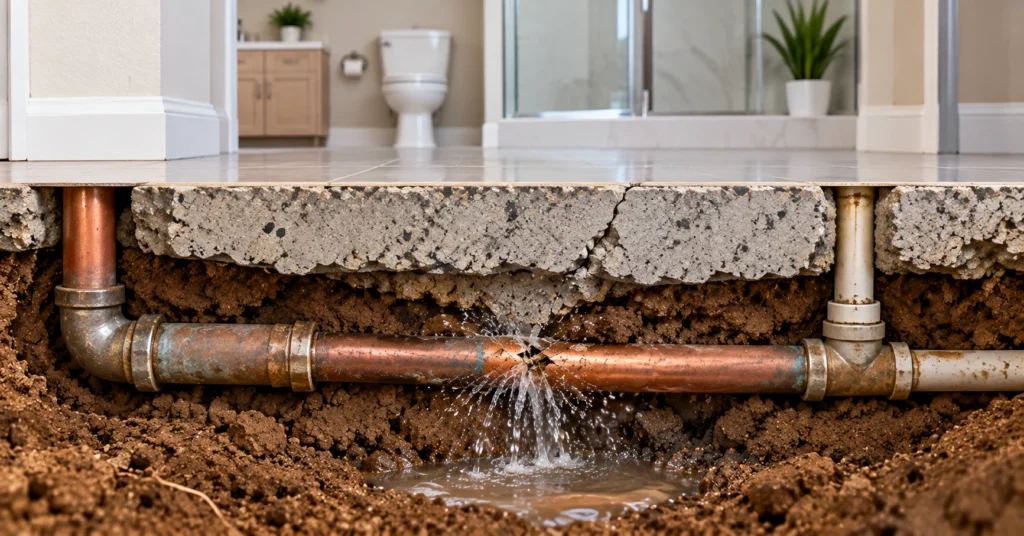
- Pipe Abrasion: Metal pipes expand when hot water runs through them and contract when they cool. A copper pipe resting against concrete or gravel wears thin at the contact point over years of friction.
- Corrosion: Soil chemicals can attack copper pipes from the outside, while mineral-heavy water corrodes them from the inside.
- High Water Pressure: Home plumbing systems are built for 40 to 60 PSI (pounds per square inch). Water pressure above 80 PSI puts extra stress on pipe joints and causes early breaks.
- Poor Installation: Bent pipes, weak solder joints, or pipes installed without protective plastic sleeves can fail early.
- Soil Movement: Clay soil expands when wet and shrinks when dry. This shifting puts heavy stress on rigid pipes buried under concrete.
How Common Are Slab Leaks in Metro Atlanta?
Many online sources on slab leaks are oriented to Texas, Arizona, and California, where most buildings have foundations directly set on concrete above expansive soils.
But Metro Atlanta is unique. It is characterized by hilly topography, where the older developments in Gwinnett, DeKalb, and Fulton counties consist of basement or crawlspace homes. Slab-on-grade construction is common in newer subdivisions, flat sites, townhouses, and patio homes.
This leads to two key facts for local homeowners:
- Check Your Foundation First: If your home has a basement or crawl space, the pipe leak beneath the floor is probably an accessible one and not a plumbing leak in the slab. Accessible pipes are easier and less expensive to fix.
- Age of the Home Matters: If your home does sit on a slab foundation, it was likely built after 1990 using copper or early PEX pipes. Pre-1990 homes in Atlanta usually have basements or crawlspaces. Copper pipes installed in the 1990s are now reaching the age where friction and abrasion breaks begin to happen.
Tip: Always confirm your foundation type before accepting a slab leak detection diagnosis. Ask any plumber who proposes cutting your concrete to prove how they located the break first.
Professional Slab Leak Detection Methods
The plumbing contractor will use specific slab leak detection equipment to locate the leak prior to cutting through the slab:
- Pressure Testing: Different sections of pipe will be isolated and tested for pressure to determine which is leaking.
- Acoustic Listening Devices: Microphones placed on the ground will be used to amplify the sound of the water that is leaking underground. The trained plumber can listen to pinhole leaks through inches of concrete.
- Thermal Imaging Cameras: Infrared cameras will be used to detect temperature variations on the floor surface, effective for locating hot water pipe leaks.
- Tracer Gas: Helium and Hydrogen gas are injected into the emptied pipe and then will rise from the slab, where the detection system will detect it.
Your Slab Leak Repair Options
Once your plumber completes the slab leak detection phase, you have four main options for slab leak repair:
| Repair Option | How It Works | Best Used For | Key Advantage |
| Spot Repair | Cutting the concrete floor to fix the specific pipe damage. | A single leak in a line that is otherwise healthy. | Lowest initial material cost. |
| Pipe Rerouting | Abandoning the broken pipe under the slab and installing a new line through walls or attic space. | Older copper pipes or leaks located under expensive flooring. | Avoids breaking up concrete floors inside the home. |
| Foundation Tunneling | Digging a tunnel under the home from the outside to access the pipe. | Leaks located under areas you do not want to disturb. | All construction work stays outside the house. |
| Whole-Home Repipe | Replacing all main supply lines with modern PEX piping. | Homes with multiple past leaks or aging plumbing systems. | Solves the root plumbing issue permanently. |
Plumber’s Recommendations: The presence of one leak in a plumbing system without any history should be addressed by doing a spot repair or rerouting the line. But if you have two leaks within a few years, a spot repair would not be an effective solution for a long time to come.
Does Homeowners Insurance Cover a Slab Leak?
Home insurance for a plumbing leak in a slab consists of three components:
- Access to Pipe (Tear-out): Homeowners’ policy normally covers the cost of tearing out and repairing the concrete floor in order to access the leaking pipe.
- Repair of Pipe: The cost of repairing the leaking pipe itself is normally not covered because of the insurance view of pipe wear as part of regular home upkeep.
- Water Damage Restoration: If the pipe leak happened suddenly and accidentally, there is a chance that your insurer will cover the damage caused to carpets, drywall and furniture. Otherwise, gradual leaking pipes which were left unnoticed for a few months can be turned down.
Reminder: Make sure to document the pipe leak with pictures and save the broken pipe piece that will be removed by your plumber.
Preventative Habits to Avoid Future Leaks
- Water Pressure Measurement: You can go to the nearest hardware store to purchase a pressure gauge for ten dollars and install it on the outdoor hose bib. If your water pressure is above 80 pounds per square inch, then you require a pressure regulator.
- One Inspection Each Year: Have a plumber examine your plumbing system each year in order to detect any variations in water pressure or deterioration of your pipes.
- Automatic Water Shut-Off Device: These devices have been made to sense any leak based on your water usage at the mainline.
What to Do Right Now If You Suspect a Slab Leak
- Run the meter test: Turn off all taps and perform the meter and hot-cold line tests to confirm water is escaping.
- Shut off the main water valve: Turn off your main water supply immediately if you see active flooding, buckling floors, or water reaching electrical outlets.
- Take photos as proof: Photograph high water bills, damp spots, and floor or wall cracks with the dates clearly visible.
- Call your insurance company: Contact your home insurance provider to open a claim before any repair work begins.
- Book a licensed plumber: Hire a professional plumber for leak detection. Ask what tools they use and what happens if they cannot locate the leak on the first try.
- Do not cut concrete early: Never allow anyone to break open your concrete floor until the exact leak location has been pinpointed.
Get Your Slab Leak Diagnosed by The Plumb Hero
If you spot any slab leak signs at your residence, don’t hesitate to allow them to continue to damage your structure. At The Plumb Hero, we offer professional slab leak detection and repair in Metro Atlanta.
Our licensed professional plumbers identify the exact location of your leak without damaging any floor surfaces, discuss all the available repair methods, and give you an upfront quote for the work.
The Plumb Hero
Address: 6089 Oakbrook Pkwy, Norcross, GA 30093
Phone: (670) 602-9426 or request service online today.
Conclusion
A water leak under a concrete slab may sound scary; however, by detecting such an issue at an early stage, you will not face structural damage to the foundations of your property. By conducting a basic water meter test and being on the lookout for certain slab leak signs, you will be able to identify any leakage at an early stage. In case you require professional help, call us today.
Frequently asked questions
What is a plumbing leak in a slab?
A crack or pinhole in the water line that supplies water to the house and goes under the concrete foundation of the house. The fact that the water pipe is enclosed in the concrete means that the leak cannot be seen until water emerges from the floor.
How to tell if you have a slab leak?
Test the water meter. Turn off everything and make a note of the meter readings, then check after two hours. This indicates a leak. Warm areas on the floor, the sound of water running when all faucets are off, and an unexpected rise in bills all indicate the same thing.
Can a slab leak stop on its own?
No. The pressure of water in the supply pipe is always consistent, and as such, the leakage occurs all the time, and the hole keeps expanding. The delay will make the situation worse.
How long can a slab leak go undetected?
Months or even weeks are the norm. The water needs to percolate through soil and concrete before coming out, and the increased water bill is not immediately obvious.
Is a slab leak an emergency?
Think of it as being urgent instead of an emergency unless water is flooding into the house, floors are bulging, or there is water getting to the electric sockets. In such cases, turn off the water source first.
Does homeowners insurance cover slab leak repair?
Typically, the coverage will include the cost of gaining access to the pipe beneath the slab, but will not cover the pipe itself or damage caused by water unless the leak is deemed sudden and not gradual. Please verify with your insurer.
Should I repair the leak or reroute the pipe?
One leak in a system with no history usually justifies a spot repair or a reroute. A second leak in the same home within a couple of years signals the pipe is failing generally, which makes a repipe the better value.
Are slab leaks common in Georgia?
Less common than in Texas, Arizona and California, where nearly all homes sit on slabs over highly expansive soil. Metro Atlanta has a mix of basements, crawlspaces and slabs, with slab construction concentrated in newer subdivisions and townhome developments.
