



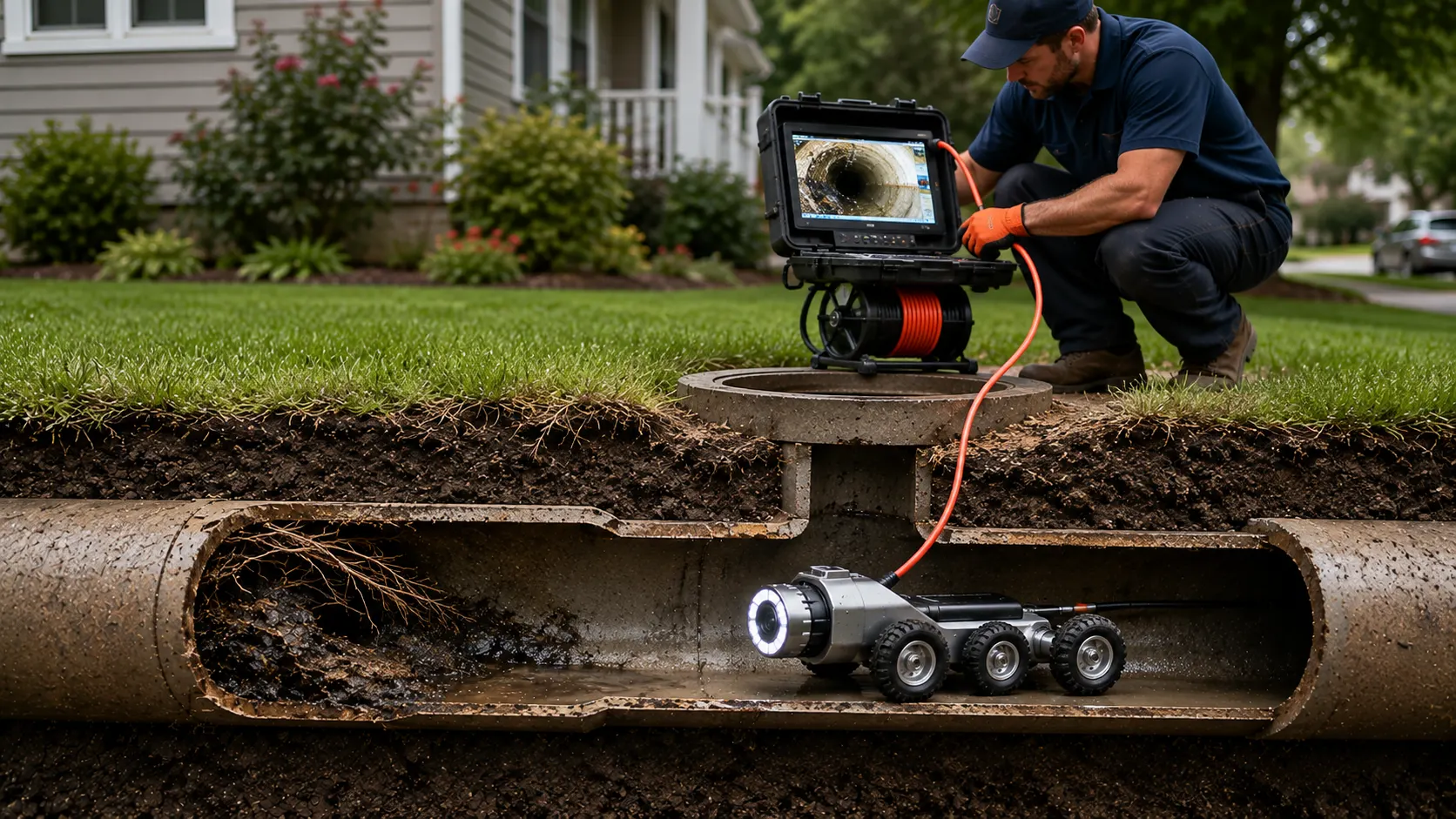
A sewer line inspection involves using a camera that can be pushed into the sewer line to view the interior using a live-view monitor for the plumber. No digging. No guessing. Inspections are generally between 30 and 60 minutes in length and range in cost from $125 to $500.
There are two primary reasons that homeowners book one. They are looking to purchase a house, and they are concerned about what is located under the yard when they close. They have slow drains, gurgling toilets, and sewage odors, and they don’t want to be guessed; they want a diagnosis.
Quick Answer: A sewer line inspection involves a flexible HD camera attached to a cleanout pipe that is inserted into your main sewer line to get a view of the condition of the line. It only takes 30 to 60 minutes, costs $125 to $500, and shows tree roots, cracks, offset joints, and sagging pipes without digging your yard.
This will cover everything from what the inspection is, who owns the pipe, when to book an inspection, how it’s supposed to work with a camera, what happens when the inspection is run, what is on screen, what it all costs, and what to do with the findings!
What Is a Sewer Line Inspection?
A sewer line inspection is a specialized video inspection of your lateral sewer line. The lateral is the private pipe running from your house to the city sewer main, the HOA tap, or your septic tank. You own the lateral, and you pay for repairs to it.
During a sewer camera inspection, a plumber feeds a small waterproof camera into the pipe on a flexible push cable. Bright LED lights on the camera head light up the pipe wall, while streaming live video to a monitor above ground. A footage counter tracks the distance traveled, so every defect gets an exact measurement.
This service goes by several names: sewer scope inspection, sewer camera inspection, camera drain inspection, or sewer video inspection. All of these describe the same diagnostic job.
Before modern camera equipment became standard, plumbers had to dig test holes to find pipe damage. A professional sewer scope inspection removes the guesswork. You see the defect, you see how far down the line it sits, and you make a repair decision from real footage instead of an estimate.
Who Is Responsible for the Sewer Line, You or the City?
Should you be asking who is responsible for the sewer line, that question will determine who will take care of the repairs, and most homeowners don’t have the correct answer.
In most towns, it is the homeowner who is totally accountable for the lateral sewer line that runs from the home up to where it joins with the municipal sewer main. The municipal sewer main is owned by the city. In some cities, though, the limit is set at the property line.
Two practical points to keep in mind:
- Call your local water or sewer authority and ask who is responsible for the sewer line on your specific street. Get the answer before you need an emergency repair, not during one.
- A sewer line inspection stops at the tap. A plumber will not push the camera into the city main, a backflow device, or a septic tank. If the footage shows the blockage sits past the tap, you have a solid case to bring to the city rather than a heavy bill to pay.
When Do You Need a Sewer Line Inspection?
A sewer line inspection uses a HD video camera to pinpoint hidden pipe cracks, root intrusion, or blockages before expensive backups occur.
Getting a Sewer Scope When Buying a House
Standard home inspections do not include underground plumbing. Home inspectors evaluate visible fixtures, drains, and water pressure. The underground lateral sits outside their scope, making a sewer scope when buying a house crucial since it is the single most expensive component of the house nobody looks at.
You should always perform a sewer scope when buying a house during your due diligence period if any of these apply:
- The home was built more than 20 years ago.
- Mature trees grow within 20 feet of the line or the foundation.
- The property sat vacant for months.
- The seller mentions past drain problems, root treatments, or a previous backup.
- The house has clay, cast iron, or Orangeburg pipe.
New construction deserves a sewer line inspection too. Heavy equipment frequently crushes laterals during site grading, and construction debris ends up in open pipes—neither of which shows up until after you move in.
Recognizing Signs of a Broken Sewer Line
Sewer problems announce themselves both indoors and outdoors. If you notice any of these signs of a broken sewer line, it warrants an immediate camera run.
Inside the house:
- Multiple drains running slow at the same time.
- Clogs returning weeks after a routine drain cleaning.
- Gurgling from toilets when a washing machine or sink drains.
- Sewage odor near floor drains, basements, or crawl spaces.
- Toilets needing a second flush to clear.
- Wastewater backing up into a tub or shower.
In the yard:
- One patch of grass growing greener and faster than the rest.
- Soggy ground or standing water with no rain to explain it.
- Sewer smell near the foundation or driveway.
- Dips, soft spots, or a small sinkhole directly above the line.
- New foundation cracks or settling.
- Rodents or insects appearing near drains and crawl spaces.
One slow drain points to a localized fixture clog, but several signs of a broken sewer line occurring at once point to a main line collapse or blockage.
You Own an Older Home
Clay and cast iron pipes were standard in homes built before the 1980s. Clay joints separate over time, while cast iron corrodes from the inside and loses wall thickness. Neither material announces failure early.
Reasonable maintenance schedules:
- PVC or ABS pipe in good condition: Every 5 to 7 years.
- Clay, cast iron, or Orangeburg pipe: Every 2 to 3 years.
- Any home with large trees near the line: Every 2 years.
- Any home with a history of backups: Annually.
Other Triggers Worth a Camera Run
Before signing a service contract with a plumber promising a full pipe replacement.
Before a kitchen or bathroom remodel adding extra fixtures to the line.
After removing a large tree, since dying roots leave voids and shift soil.
Before listing your home, a buyer’s sewer scope inspection holds no expensive surprises.
After a neighborhood sewer main repair or heavy municipal street work.
How Does a Sewer Line Inspection Work?
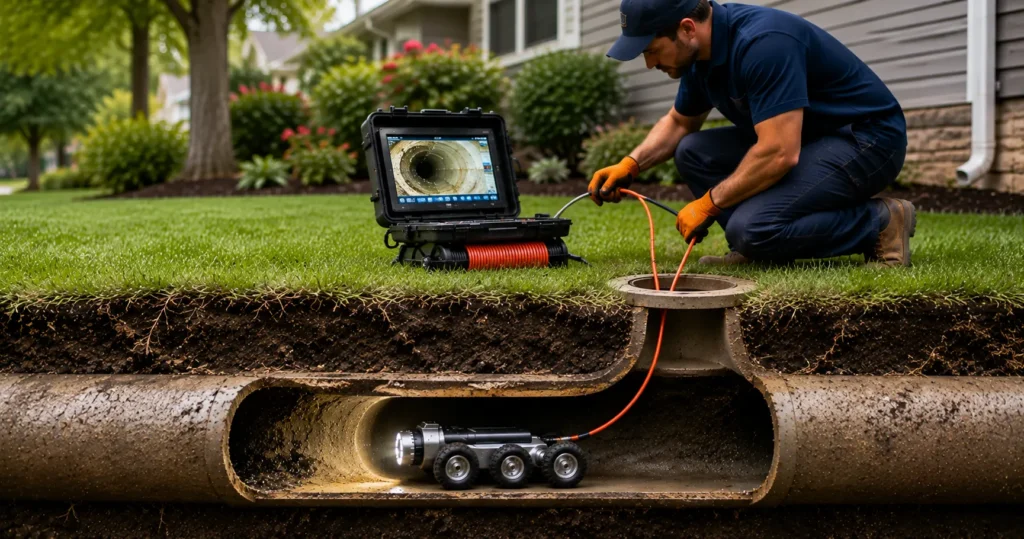
The process takes under an hour in most homes and leaves your yard completely intact.
What You Do Before the Plumber Arrives
- Clear access to the cleanout. Move stored boxes, planters, or mulch covering the cap.
- Write down your symptoms and when they happen. Backups after laundry point somewhere different than backups after rain.
- Stop running water once the technician sets up. Water flowing during the scope blurs the picture and pushes the camera offline.
- Ask upfront whether you receive a copy of the video and a written report.
The Step-by-Step Process
- Location: The plumber locates the cleanout, a capped access pipe tied straight into the main line, usually located in the basement, crawl space, or outside near the foundation.
- Pre-Flushing: Water runs through the lines first to flush loose debris and lubricate the pipe. Wet pipe floats the camera head and reduces the risk of catching on scale.
- Setup: Drop cloths go down around the work area. The plumber removes the cleanout cap, checks the equipment, resets the footage counter, and starts recording.
- Camera Feed: The camera feeds into the pipe on the push cable. The technician moves slowly and pauses at every defect long enough to document it clearly. Most residential runs cover 100 to 400 feet.
- Location Tracking: A sonde transmitter inside the camera head broadcasts a signal. A locator wand above ground picks up that signal and marks the exact spot and depth of any defect. This is how a repair crew digs one surgical hole instead of trenching five.
- Completion: The camera reaches the city tap and stops. The plumber pulls it back while still recording, reinstalls the cleanout, and runs water to check for leaks.
- Review: You watch the video footage with the technician and get the findings explained defect by defect with matching footage marks.
What Happens When There Is No Cleanout
Older homes sometimes lack an accessible cleanout. In these cases, two options follow:
- The plumber will pull the toilet, put the sewer camera down through the closet flange, and replace the toilet using a new wax ring.
- The plumber will install a cleanout on the drain line. This will cost you more now but save money in the long run since you only have to pay once.
What Can a Sewer Line Inspection Find?
Every defect below shows up clearly during a sewer camera inspection, complete with a footage mark and a surface location:
- Tree Root Intrusion: Roots follow moisture into joints and hairline cracks, then thicken until they choke the line.
- Cracks and Fractures: Longitudinal cracks run along the pipe, while circular fractures ring it allowing soil inside and sewage out.
- Offset Joints: Soil movement shifts pipe sections out of alignment, creating a lip that catches paper and grease.
- Bellies and Sags: A section dips below grade and holds standing water. Because gravity moves waste, a belly kills the slope so solids settle and build up.
- Corrosion and Scale: Cast iron rusts from the inside out. The wall roughens, flakes, and narrows the usable diameter (appearing as a pitted orange surface on camera).
- Grease Buildup: Layers of hardened fat coat the pipe wall and catch passing debris.
- Foreign Objects: Flushable wipes, feminine products, toys, and roots from removed trees lodged in the line.
- Collapsed Sections: The pipe wall fails and closes the line. Camera travel stops at the collapse, pinpointing the exact repair spot.
- Deformed Orangeburg: Wood-fiber pipe from the 1940s–1970s that flattens into an oval under soil load and fails as an entire system.
- Improper Connections: Downspouts or DIY tie-ins illegally dumping stormwater into the sanitary line.
Pipe Material and What It Tells You
The camera identifies your pipe material, which helps set your long-term expectations:
ABS (1970s-Present): Black plastic pipe similar in performance to PVC pipe.
Clay Pipe (Pre-1980): Good for resisting chemical corrosion but poor at the joints and is conducive to roots. Longevity: 50-60 years.
Cast Iron (1900-1980): Very strong, but corrodes internally after some time. Life span: 50-75 years.
Orangeburg (1945-1972): Easy to deform and collapse under soil pressure. Life span: 30-50 years (runs have exceeded their life span by many years now).
PVC (1980s-Present): Smooth surfaces, sealed joints, resistant to roots, inside of pipe. Life span expected: 75-100 years.
How Much Does a Sewer Line Inspection Cost?
The total sewer line inspection price will be between $125 and $500 dollars for most homeowners. The national average price for a sewer line inspection is just under $300 for a typical residential sewer line that has access to a cleanout.
What Changes the Price?
- Access Point: An accessible cleanout keeps the sewer line inspection cost at the lower end. If a toilet pull is required, expect to pay $175 to $750 due to extra labor.
- Pipe Length and Routing: Longer lengths, several tight curves, and common lateral lines make for a longer process.
- Line Quality: Clogs make movement difficult and sometimes necessitate a cleaning prior to completion of the inspection.
- Time: Special rates apply for emergency, same-day, night, and weekend appointments.
- Documentation: Make sure that the videos and written report are part of the basic cost.
What About “Free” Sewer Inspections?
Free inspection offers usually exist bundled with a paid drain cleaning service. However, be cautious: a “free” inspection is often used to get a technician on-site to pitch inflated repair quotes. Paying a fair sewer line inspection cost ($125 to $500) to a licensed plumber ensures you receive unbiased raw footage that you own and can use for a second opinion.
Inspection Cost vs. Repair Cost
A camera run is the cheapest insurance you can buy for your home’s plumbing. Consider typical repair costs:
- Root Cutting or Hydro Jetting: $350 – $900
- Spot Repair (Single Section): $1,000 – $4,000
- Trenchless Pipe Lining: $80 – $250 per foot
- Pipe Bursting Replacement: $60 – $200 per foot
- Traditional Excavation: $3,000 – $15,000+
How Long Does a Sewer Line Inspection Take?
If you are wondering how long a sewer line inspection will take, you should plan on 30 minutes to 1 hour. This time frame covers equipment setup, running the camera out and back, and walking through the findings on video.
So, how long does a sewer line inspection take if complications arise? The job can stretch to roughly 2 hours if the plumber has to pull a toilet for access, if heavy blockages slow camera travel, or if the pipe layout features multiple complex bends.
Getting a Sewer Scope When Buying a House: Step-by-Step
This is where a sewer scope when buying a house offers the highest return on investment:
- Schedule Early: Book the scope during your initial inspection contingency window alongside the general home inspection.
- Buyer Pays: Treat the fee as a standard part of your due diligence budget next to pest and radon inspections.
- Run Water First: If the property has sat vacant, run water through the fixtures first to lubricate dry lines for a clearer camera read.
- Get Written Permission: If no cleanout exists, obtain seller approval in writing before pulling a toilet.
- Use Video Evidence: Written notes carry less weight in price negotiations than high-definition video showing precise depth and footage marks.
- Get Real Quotes: Use a licensed plumber to price repairs based on the video footage.
- Know Your Options: After a bad scope, you can ask the seller to repair the line before closing, request a closing credit, renegotiate the purchase price, or walk away entirely.
What Happens After a Sewer Line Inspection?
After the inspection, the plumber reviews the video footage with you and explains what was found. If there are no problems, you get peace of mind and documentation of the pipe’s condition at the time of inspection. If issues are found, the plumber explains your repair options and gives you a cost estimate.
Most plumbers record the inspection video and provide you with a copy. This is useful when negotiating repairs in a home purchase, filing an insurance claim, or getting a second opinion before agreeing to a major repair.
Not every problem found during an inspection requires immediate repair. A small crack with no active leaking might just need monitoring. Root intrusion that is caught early can sometimes be cleared and then treated with root-inhibiting chemicals to slow regrowth. The inspection helps you understand what needs to be done now versus what can wait.
Does Homeowners Insurance Cover Sewer Line Repairs?
The main reasons for sewer system breakdowns are wear and tear, age, corrosion, and tree root intrusion. Standard homeowner’s insurance does not cover such damages.
For your safety, here are two special add-ons you may need from your insurance provider:
- Service Line Coverage: This covers the expenses that arise when there is a need to repair or replace underground lateral utility lines.
- Water Backup Coverage: This covers damages that are caused by the backup of sewage.
Should You Do a Sewer Inspection Yourself?
While you can rent scope cameras, DIY inspections have major limitations:
- Interpretation: Distinguishing between a harmless joint shadow and a structural crack requires professional experience.
- Location Tracking: Rental units rarely include locator sondes, meaning you may spot a break without knowing where it sits under your lawn.
Paying $300 for a professional buys expert interpretation and surface location tracking, not just raw footage.
Local Focus: Sewer Line Inspection in Norcross, GA
If you need a sewer line inspection, Norcross homeowners face unique local conditions. Across Norcross and Gwinnett County, dense pine and oak root systems frequently infiltrate aging clay and cast iron laterals. Additionally, the region’s heavy red clay soil shifts during seasonal rain cycles, leading to pipe offsets and sagging bellies.
When scheduling a sewer line inspection, Norcross plumbers should be familiar with local municipal codes and tap connection guidelines for Gwinnett County Water Resources.
How to Choose a Company for a Sewer Line Inspection
Before hiring a plumbing company, ask these essential questions:
- Are you licensed and insured, and what is your license number?
- Does the price include the full video recording and a written report?
- Does your camera head carry a transmitter sonde for surface locator tracking?
- Do you provide itemized written repair estimates tied to video footage marks?
- Does the inspection fee apply toward any subsequent repair work?
- Who performs the repair work for your in-house team or a subcontractor?
A company that hesitates to give you raw, unedited footage is a company you should skip.
Sewer Line Inspection in Norcross and Metro Atlanta
The Plumb Hero runs sewer line inspections for homeowners across Norcross, Duluth, Alpharetta, Johns Creek, Marietta, Decatur, Sandy Springs, Buford, and the surrounding metro Atlanta area.
Local conditions shape what we find. Gwinnett and North Fulton neighborhoods built before 1980 sit on clay laterals. Georgia red clay soil shifts with wet and dry cycles and pulls joints out of alignment. Mature hardwoods and pines send roots straight toward any leaking joint they find.
Every inspection includes the recorded footage, a written report with footage marks, and a repair quote if you need one. No pressure to book work on the spot.
Call (470) 602-9246 or schedule online.
Frequently Asked Questions
Is a sewer line inspection worth it when buying a home?
Absolutely, if your house is more than 20 years old, this inspection costs between $125 and $500. Sewer line replacement is from $3,000 to $15,000 and beyond. Knowing what the issue is before closing allows you to choose one of four courses of action: seller repairs, credit at closing, price adjustment, or walk away. Knowing the issue after closing means you pay for it.
What does a sewer camera inspection show?
The condition of your sewer line in real-time. Cracks, root invasion, grease and debris accumulation, corrosion, misaligned joints, bellies, breaks, obstructions, foreign material, and even the composition of the pipe material itself. The locator device in the camera system pinpoints the precise location and depth of each defect.
How often should I get a sewer line inspection?
A minimum of every five to seven years for homes that have PVC piping in good condition. A minimum of every two to three years for those with clay, cast iron, or Orangeburg piping, as well as for those with large trees in proximity to the sewer line. Call for an appointment immediately whenever you notice more than one drain moving slowly or having issues.
Does a home inspection include the sewer line?
No. A basic home inspection only involves visible plumbing fixtures, drain pipes, and water pressure. The underground sewer line does not fall within the realm of home inspection.
Do I need a cleanout for a sewer line inspection?
It is not mandatory, but having one will speed up the process and save money, as without a cleanout, the plumber will go through the pulled-out toilet and then reset it for an additional 50-250. It might be reasonable to install a permanent cleanout if you are likely to get the drain services in the future.
How long does a sewer line inspection take?
It takes about 30 minutes to one hour for an ordinary residential inspection. If there is no toilet available or there are serious blockages, the length of time may reach two hours.
What happens if the inspection finds a problem?
The plumber will provide information about the issue, its location, and repair possibilities. The crack and early growth of roots are being watched for or treated. Offset pipes, collapsed pipes, and deformed Orangeburg should be repaired. You’ll get your video, so getting another opinion will cost you nothing but time.
Are free sewer line inspections legitimate?
Most of them are typically included in paid drain cleaning. Some of them are just designed to have a technician visit prior to providing a highly-priced repair estimate. Inquire whether the footage will be yours and whether the company repairs the line. A paid inspection costs from $125 to $500.
Who is responsible for the sewer line, the homeowner or the city?
The homeowner in most cities usually owns the lateral from the house to the main line. Some cities consider the property line as the starting point of their responsibility. You can check with your water authority in your city for the answer.
Does a new construction home need a sewer line inspection?
Yes, the heavy machinery crushes the lateral during construction, and construction debris is in the pipe that only shows itself when you have drain backups.
Will insurance pay for sewer line repairs?
The regular policy does not cover sewer line repairs, but the service line policy does, with a little cost on an annual basis. Water backup insurance is the insurance that covers the interior damage caused by the backup.
Should I get a sewer line inspection before selling my house?
Only if the property is old or has had drainage problems in the past, getting the problem diagnosed prior to putting the home on the market will give you negotiating room for how you can fix it.
