



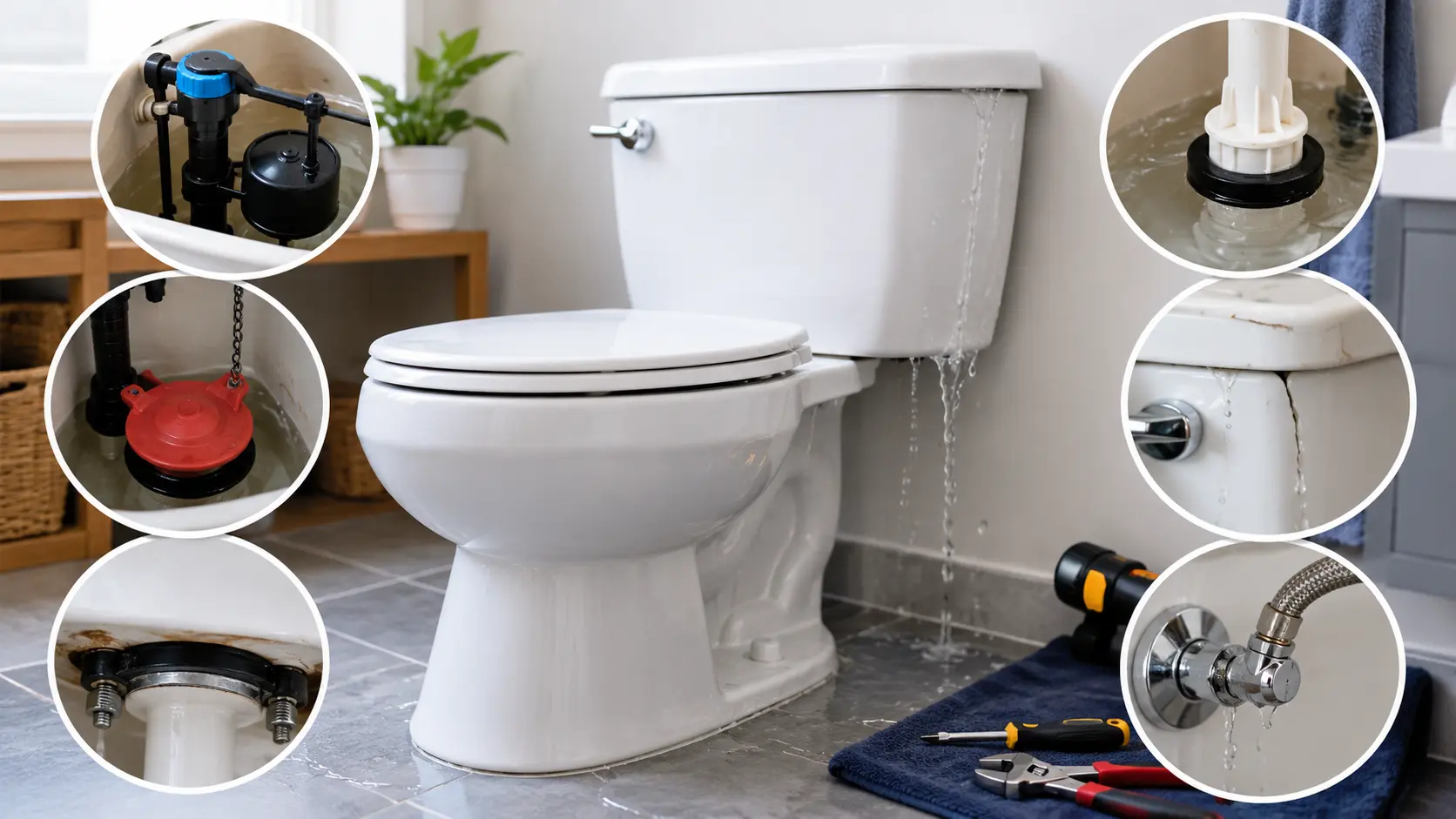
Quick Answer: The reasons for a toilet tank leaking may be damage to rubber washers on the bolts, pressure from the tank seal, a bad flapper valve, or loose mounting bolts. Shut off the water supply, empty the tank, and replace the rubber components with a repair kit purchased for just $15 at your local hardware shop.
A toilet tank leak may cost you up to 200 gallons of water every day, which increases both your utility bills and the chances of water damage to your bathroom flooring. In either case of water leakage from either of the two situations, the fix is quite easy and takes about one hour.
The following is a short overview of the most frequent symptoms, causes, and typical cost of repairs:
| Symptom | Primary Cause | Average DIY Repair Cost |
|---|---|---|
| Water pooling on the floor under the tank | Worn Tank-to-Bowl Gasket / Loose Bolts | $10 – $15 |
| Water running continuously into the bowl | Faulty Flapper Valve | $5 – $10 |
| Water dripping from the supply line connection | Damaged Fill Valve Washer / Cross-Threaded Adapter | $8 – $12 |
| Visible hairline crack on the porcelain tank | Cracked Tank | $100 – $200 (Requires Replacement) |
Emergency Action: What to Do Immediately When a Leak Starts
- Step 1: Close the water supply: Look for the water control valve that regulates water flow to the toilet and turn it off.
- Step 2: Drain the water: Flush the toilet to drain any extra water in the tank.
- Step 3: Be prepared for water leakage: Place some towels or a bucket beneath the water leak area.
Understanding What Causes Toilet Tank Leaks
If you have ever asked yourself, “Why is my toilet tank leaking?” There can be only two reasons for that: either the parts have worn out, or there is too much water pressure in the pipes. The constant contact with minerals from tap water, chemicals used for cleaning the bowl, and mechanical use causes degradation of rubber washers in the tank.
Signs Your Toilet Tank Is Leaking
Finding a leaking toilet tank early can avoid subfloor decay. Be on the lookout for these typical signs:
- Puddles on the ground: Formation of water in a pool underneath or behind the toilet.
- Phantom flush: Toilets flush themselves even without the press of the flush handle.
- Running water noise: Running water sound heard continuously in the toilet tank.
- Water bills: Unexpected increase in water utility bill amounts.
- Test for Food Coloring: Add 5-10 drops of food coloring to your toilet tank. You do not have to flush the toilet. After 15 minutes, if you see any colored water in your toilet bowl, your toilet tank is leaking.
Is It a Real Leak or Tank Condensation (“Sweating”)?
If the toilet is in a warm or moist environment, the water dripping from the tank may be caused by condensation of water vapor due to the cold water refilling the tank. The water drops on the floor appear as if there is a leak in the toilet plumbing system. One way to test whether this is actually happening is to wipe the porcelain outside the tank clean.
6 Common Causes of a Leaking Toilet Tank
Knowing the exact reason why your toilet tank is leaking from the bottom or inside ensures that you will purchase the correct replacement parts and tools.
1. Worn-Out or Cracked Rubber Washers
The rubber washers create a watertight seal for the tank bolts and the flush valve hole. Due to the chlorine content and other minerals in the city’s water system, the rubber washers are damaged by cracking or breaking down.
2. Loose Tank Bolts
The bolts that hold the tank onto the toilet bowl depend upon the rubber washers that fit tightly into them. Through years of regular use, normal vibration and movement of weight are enough to unscrew the nuts, causing water to leak from the bottom.
3. Corroded Bolts or Hardware
The regular metal bolts will eventually get damaged due to constant exposure to water. The problem is that rust damages the threads of the bolt and therefore prevents the seal from forming, leading to leaks in the mountings.
4. Faulty Flapper Valve
A flapper refers to the rubber seal located at the toilet leaking from the bottom of the tank that rises every time the toilet handle is pulled. Flappers can become hard, filled with mineral buildup, or misaligned, thus failing to fit properly on the flush valve seat.
5. Damaged Fill Valve
This is the valve that determines the level of water in the tank. If the valve body is cracked or the washer of the lower locknut wears out, water will flow through the bottom of the valve.
6. Cracked Toilet Tank
If an individual leans too far back or over-tightens mounting equipment, then porcelain may crack. Hairline cracks, even below the water line, will continuously leak water onto your bathroom floor.
Toilet Tank Leaking After Bidet Installation: T-Adapter Fix
A very common issue in modern bathrooms is a toilet tank leaking immediately after installing an add-on bidet attachment (such as Tushy, Lux Bidet, or Brondell).
- Problem: The installation process involves threading a metal T-adapter onto the bottom part of the plastic fill valve shank. When threading metal onto plastic or over-tightening the metal adapter, the inner rubber washer becomes distorted, or the plastic fill valve shank cracks due to cross-threading.
- Solution: Turn off the water supply, unthread the metal T-adapter, and make sure that the rubber washer inside the T-adapter is straight and not damaged. Thread the T-adapter onto the plastic fill valve shank by hand to make sure it’s tight, and then do a quarter turn using the pliers. Don’t use thread sealant tape on rubber washer-sealed connections.
High Municipal Water Pressure: The Hidden Cause Behind Repeated Leaks
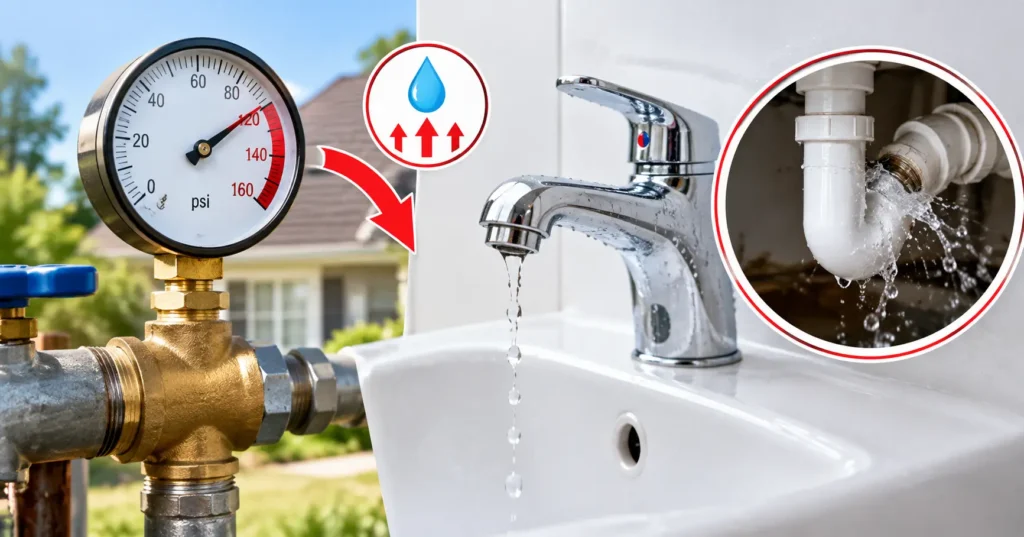
If you continue fixing your flappers, fill valves, and bolt washers only for them to leak after some time, chances are that your house water pressure is too high.
- Risks of High PSI: A standard home plumbing system is built for 40 to 60 PSI (Pounds Per Square Inch). If the PRV in your house malfunctions, city water pressure will go beyond 80 PSI.
- Impact on the Tank: The high pressure will force water through the rubber seal, making the fill valves vibrate all the time, while degrading the washers at a fast rate.
- How to Fix It: Just screwing an affordable water pressure gauge onto an outdoor water faucet or laundry connection will tell you your house’s PSI. If your PSI is higher than 75, get a plumber to examine or fix the PRV of your house.
Toilet Tank Leaking From Bolts: Causes & Step-by-Step DIY Fix
In case of a toilet tank leaking from bolts, the problem is normally caused by damaged rubber washers, corroded metal parts, or incorrect tightness while installing the toilet tank. The water leaks from the bolts used to connect the tank and bowl through the hole at the bottom part of the toilet tank into the back part of the toilet bowl.
Safety Warning: How to Avoid Cracking Porcelain Hardware
Porcelain is very delicate under pressure. Start by hand-tightening the nuts from the tank to the toilet bowl, and then use the wrench to tighten them by 1/4 to 1/2 turns after ensuring that the tank is leveled. Use little force when tightening the nuts; otherwise, porcelain will crack.
Step-by-Step Bolt & Washer Replacement Guide
- Turn off the water source: Close the toilet water shut-off valve found behind the toilet clockwise until it’s tight.
- Empty the water tank: Press the toilet button to flush the water out of the toilet tank, and then use your hand to hold the flusher so that all the water is flushed out of the toilet tank. Use a sponge to remove any water left in the tank.
- Loosen the water line connection: Use a wrench to loosen the water line connection nut found beneath the toilet tank.
- Remove the old bolts: Unscrew the rusty nuts and bolts with the help of a screwdriver from the inside and a wrench from below the toilet tank.
- Replace with new parts: Pass the new bolts with rubber washers through the toilet tank, and tighten the nuts from below using a wrench.
Toilet Tank Leaking From Bottom: Tank-to-Bowl Gasket Fix
If you discover a toilet leaking from the bottom of the tank in areas other than the bolts, the culprit is usually a compressed tank-to-bowl gasket (also known as a spud washer).
- What it is: The sponge rubber ring around the base of the tank has worn down to a point where the water will splash outward during the flushing process.
- Fixation: Unscrew the tank entirely using the tank screws. Remove the old foam gasket from the bottom of the flush valve and install a new universal gasket, such as Fluidmaster or Korky, after which you can reattach the tank to the bowl.
2-Inch vs. 3-Inch Gasket Sizing Guide
- Gasket for 2 Inches: Will work with older-style 1.6 GPF (gallons per flush) toilets.
- Gasket for 3 Inches: Will work with high-efficiency 1.28 GPF toilets.
Important Distinction: Tank Leak vs. Failed Wax Ring (Floor Leak)
A tank leak should never be mistaken for a floor seal leak. Water accumulation at the bottom of the toilet bowl at floor level that gives off an offensive sewer smell is a clear indication of a leaking wax ring seal on the toilet bowl. If the water flows out above the bowl rim and smells clean, it’s a tank leak.
Toilet Tank Leaking Into Bowl: Causes and Fix
If your toilet tank is leaking into the bowl, then it is an internal seal problem and not an external leak.
- Cause 1: Faulty or Distorted Flapper. Disconnect the problematic rubber flapper from where it is attached to the flush valve and fit in a new universal flapper. Adjust the chain so that it is longer and has some slack.
- Cause 2: Adjustment of Overflow Tube and Water Level. If the water is pouring into the overflow tube, turn the fill valve float clockwise to decrease the water level by 1 inch below the top of the overflow tube.
Can You Patch a Cracked Toilet Tank with Epoxy or Silicone?
One of the most frequently asked questions among homeowners revolves around the issue of applying waterproof silicone, Flex Seal, or epoxy putty to a hairline crack on a porcelain tank.
- The Truth: Though water-resistant epoxy will temporarily halt dripping of water on the outside above the water line, any repair made on the inside of the tank is a grave liability.
- The Hazard: The toilet tank holds up to 3.5 gallons of water, under constant hydrostatic pressure. A cracked porcelain tank may burst, resulting in flooding of your bathroom with hundreds of gallons of water within minutes and leading to thousands of dollars worth of property damage.
- The Conclusion: Never use temporary repairs to cover up structural cracks within the porcelain tank below the water line.
Preventive Maintenance: How to Prevent Future Toilet Tank Leaks
Keep the pipes in your bathroom free from leaks by observing these maintenance tips:
- Do Not Use Chemical Dropping Tablets: Chemical dropping tablets that are kept inside the tank will cause the rubber flappers and washers to deteriorate quickly.
- Check Your Interior Parts Yearly: Inspect rubber parts once a year for any signs of hardening, cracking, or mineral deposits.
- Change Water Supply Hoses after Five Years: The flexible braided steel hoses help prevent pipe bursts under the fill valve.
When to Call Plumb Hero for a Leaking Toilet Tank?
While minor problems can be solved from the comfort of your home, major problems would need an expert. Trying to fix a major leak without having the right tools may result in damaging the ceramic and waterlogging the floor.
That’s where Plumb Hero comes in! We offer fast, reliable, and affordable toilet repair and replacement services.
Our Toilet Repair Services:
- Leak Discovery: Locating any leak that may exist in tank bolts, gaskets, and porcelain.
- Valves and Seals Replaced: Flappers, fill valves, and rubber seals installed.
- Water Shut-Off Valves Fixed: Water shut-off valves and water supply lines fixed.
- Toilet Replaced: Old, cracked, and broken toilets replaced with new toilets.
- Plumbing Emergency: Immediate services for any water leaks or water overflows.
Whether your toilet tank is leaking from the bolts, won’t stop running, or needs a complete replacement, our licensed plumbers are ready to help.
Save time and avoid costly damage; call Plumb Hero today for honest pricing and expert service!
Service Areas We Cover
Plumb Hero offers prompt, efficient toilet repairs and emergency plumbing services in Georgia, including:
- Atlanta & Metro Area: Atlanta, Alpharetta, Johns Creek, Marietta, Sandy Springs, Cumming, Duluth, Norcross, Buford
- Gwinnett & Walton Counties: Dacula, Loganville, Monroe, Bethlehem, Walnut Grove
- East Metro & Athens Region: Athens, Decatur, Conyers, Covington, Oxford
Frequently Asked Questions (FAQs)
Why is my toilet tank leaking from the bolts?
The leak occurs through the nuts of the toilet tank because the rubber washers inside the toilet tank wear out due to the wear and tear of the nuts, causing the seal to break.
Can a toilet tank leak without any visible cracks?
Yes, toilet leaks are caused completely by the destruction of the rubber valve and not because of the porcelain tank getting damaged.
How do I stop my toilet tank from leaking at the bottom?
Shut off the water line, drain the tank, and replace the hardware that connects the tank to the bowl, made up of brass bolts, rubber washers, and a foam gasket.
Is a toilet tank leaking into the bowl wasting water?
Indeed. The leak could be anywhere between 30 and 200 gallons per day. This means that you will be paying expensive water bills monthly.
How much does it cost to fix a leaking toilet tank?
Repairing the items by oneself can cost between $5 and $20, depending on how much material is available in a hardware shop like Home Depot. However, having a professional plumber do the repairs can cost between $150 and $300.
Conclusion: Stop Your Toilet Tank Leak Before It Causes Costly Damage
While a leak from a toilet tank may begin with something as simple as a drip or trickle of water into the bowl, overlooking this issue may result in high utility costs, mold formation, and extreme decay within the subfloor beneath the toilet. Diagnosing whether the leak occurs due to faulty tank bolts, a compressed tank-to-bowl gasket, or a flapper valve will help any homeowner fix the toilet.
But in case of continuous leakage, cracks in the porcelain, or problems related to excessive water pressure, it is wise not to put your house in danger. The licensed plumbers from Plumb Hero can provide you with the required help immediately.
Looking for prompt toilet repairs? Then give us a call at Plumb Hero and enjoy quality services at affordable prices!
