



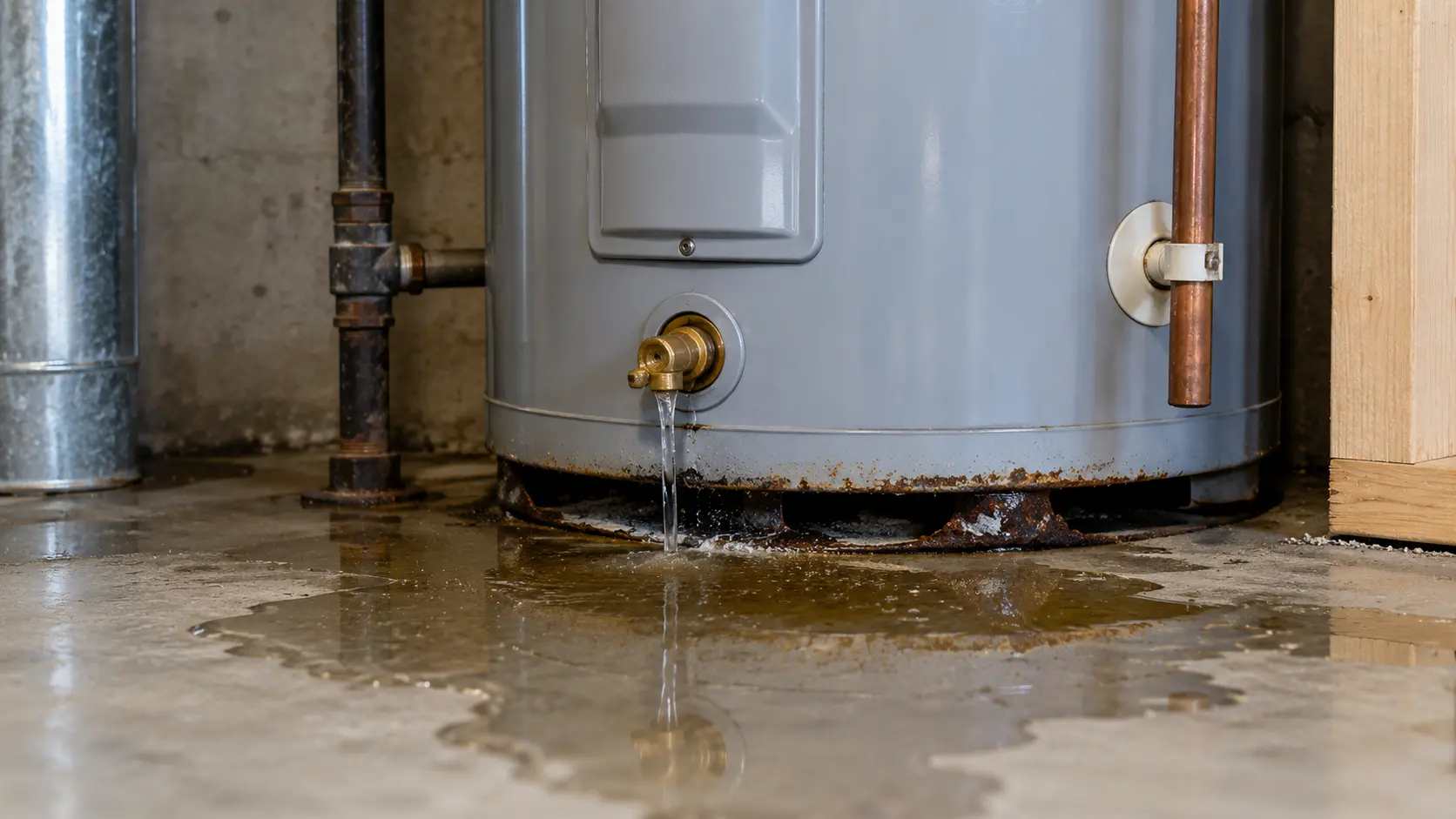
The problem of a water heater leaking from the bottom surfaces can be attributed to five possible reasons, including a faulty drain valve, the discharge of the T&P relief valve, loose pipe connections above the heater, high water pressure, or corrosion of the tank.
While leaks caused by valves and fittings are relatively easy to repair, those emanating from a corroded tank cannot be fixed.
Step One: Rule Out Condensation
Not every water heater pooling water has an actual structural leak.
When cold water goes into the tank, it causes cooling of the outer surface of the steel tank. In an environment where there is heat and humidity, the condensed water will drip from the cool metal directly onto the ground below. The same happens with gas appliances during ignition after remaining dormant.
Two simple checks reveal whether you are dealing with condensation or a true leak:
- The Wipe Test: Dry the floor and the tank completely, then watch for 30 minutes. Condensation returns as a light, even film across the whole surface. A real leak returns as water actively tracing from one specific point.
- Seasonal Factors: Condensation is far more common during humid summer months or right after heavy hot water usage. It clears up once the heater warms back up.
High humidity against a tank full of cold water produces enough moisture to look alarming, making condensation a frequent false alarm.
The Five Causes of Water Under a Water Heater
If you have a water heater leaking from the bottom of tank areas, work through these five causes in order. The first four are fixable components; the fifth requires a full replacement.
1. Water Heater Drain Valve Leaking
The drain valve is the spigot located near the base of the tank. A valve that fails to seat properly after an annual flush or one with degraded internal seals drips continuously.
A water heater drain valve leaking is the most common cause of moisture at the base and the least expensive to resolve. Tightening the valve stem sometimes stops it, but replacing the valve entirely is usually the best fix.
2. T&P Relief Valve Discharge
The T&P relief valve is located on the side or the top of the water tank and features a discharge pipe going down to the floor level. The water exiting from the bottom of the discharge pipe is not coming from the tank body.
All that has happened is that the valve has been opened due to an increase in either the temperature or the pressure inside the system. Some causes of the problem may include very high municipal water pressure, a high thermostat setting, or thermal expansion.
3. Loose Pipe Connections
Thermal expansion and contraction loosen plumbing connections over time. A slow drip at a top connection runs down the outside casing of the unit and pools at the base.
This frequently gets misdiagnosed as a water heater leaking from bottom components when the problem is actually at the top. Trace moisture upward before assuming the inner tank has failed.
4. High Water Pressure
A pressure reading above 80 PSI will place strain on all connections within your plumbing system. If you have high pressure in the system, it will cause the T&P valve to trip. This problem can be solved by putting in a PRV or a thermal expansion tank in the main water line.
5. Corroded Inner Tank
This is what will kill the unit. After some time, excessive amounts of sand get deposited at the bottom of the tank, and because of the trapped heat, the unit’s glass coating develops blisters. When the water starts leaking inside the exterior metal casing of the unit, replacement is inevitable.
How to Tell Which Issue You Have?
The location of the pooling water reveals almost everything you need to know about your system:
| Where the Water Appears | Likely Cause | Repair or Replace? |
| Directly under or inside the drain valve | Water heater drain valve leaking | Repair valve |
| At the bottom of the discharge pipe | T&P relief valve opened | Repair pressure cause |
| Running down the outer jacket walls | Loose fitting above the tank | Repair pipe fitting |
| Seeping from under the base with no visible origin | Internal tank corrosion | Replace water heater |
| Thin, light film across the whole tank jacket | Normal condensation | No repair needed |
Water emerging from beneath the bottom jacket with no visible leaks above indicates an internal tank breach. No sealant, tightening, or individual part replacement can patch a compromised inner shell.
Why Is My Water Heater Leaking From the Bottom? (And Why It’s the Worst Place)
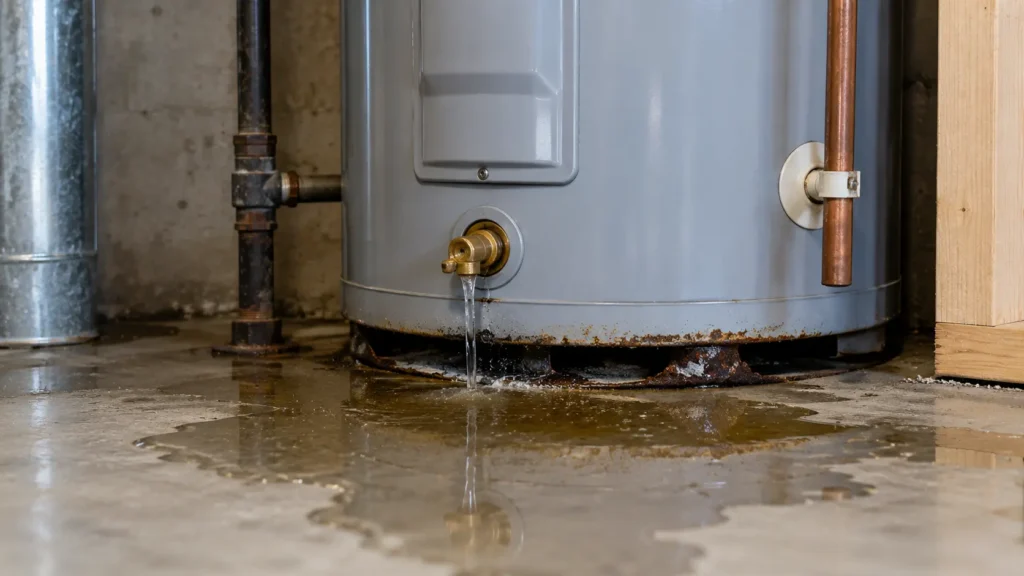
When you ask yourself, “Why is my water heater leaking from the bottom?”, this will tell you whether you require a repair or replacement.
Leaking on the top or sides will be a problem related to the replaceable parts such as valves, nipples, or water lines. But leaks in the lower part may be a problem with the metal tank shell, and the tank is the water heater itself.
There is also a big water volume risk. Usually, the average volume in a tank is 40 to 80 gallons. When a valve fails, it just starts dripping, but when a whole tank wall fails, it can burst suddenly and pour all of that water on the floor. This problem will cost you a lot if the water heater is located in the attic or upper closet, or even in the living area of your house.
What Causes a Water Heater Tank to Corrode?
Three primary factors shorten tank life:
- Sediment Deposit: Minerals that are normally present in water fall out when heated and collect at the bottom of the tank. This acts as an insulator for the bottom of the tank, resulting in overheating of the bottom by the heater or elements, thereby making the bottom crack.
- Anode Rod Depletion: The anode rod is a sacrificial metal rod suspended inside the tank. It attracts corrosive elements so the steel tank doesn’t rust. Once the anode rod wears away (typically every 3 to 5 years), corrosion attacks the tank walls instead.
- System Age: Standard tank water heaters last 8 to 12 years on average. A water heater leaking from bottom seams at year 11 is simply a unit reaching the end of its functional life.
Is a Leaking Water Heater an Emergency?
So, is a leaking water heater an emergency? Yes, it should always be treated as urgent.
A small drip rarely stays small. Tank corrosion is progressive; an active seep can turn into a full floor failure without warning. The structural water damage caused by 50 gallons of uncontrolled water costs far more to remediate than replacing the appliance itself.
Immediate Emergency Steps:
- Turn off the electric power circuit breaker or the gas valve.
- Close the cold water inlet valve on top of the water heater.
- Contact a professional plumber for prompt diagnosis.
Never continue operating a leaking unit. Heat and continuous municipal pressure accelerate active leaks and increase structural risks.
Repair or Replace: How to Decide?
Four simple questions help determine your best option:
- Where is the source? Leaks from the tank shell mean replacement. Leaks from external valves, pipes, or fittings mean repair.
- What is the age of the unit? If the unit exceeds eight to ten years of age, assess whether the cost of repair outweighs the cost of a new unit. Any significant repair done on a twelve-year-old unit will give temporary relief.
- What is the repair cost? Fixing a water heater drain valve leaking or replacing a T&P valve is inexpensive. If a repair approaches 50% of the cost of a new unit, replacement makes more financial sense.
- Has it failed repeatedly? Frequent component failures signal an aging system nearing total breakdown.
Note: Tankless water heaters eliminate standing water storage entirely, removing tank corrosion failures altogether. They carry higher upfront installation costs, but offer longer lifespans.
How to Prevent Future Leaks?
Three simple maintenance habits protect your equipment:
- Annually Drain the Tank: Sediment removal prevents wear on the inside floor coating and ensures heating efficiency.
- Check the Anode Rod Every 3 Years: Replacement of the sacrificial anode rod prior to depletion keeps corrosion away from the tank walls.
- Monitor House Water Pressure & T&P Valves: Keep house water pressure at less than 80 PSI and test T&P valves annually.
Installing a metal drain pan under units located above finished living spaces paired with an automatic water shut-off sensor provides an extra layer of protection against unexpected leaks.
Frequently Asked Questions
Why is my water heater leaking from the bottom?
The most common causes include: a leak in the drain valve, an open T&P relief valve, loose overhead plumbing working its way down the side, too much water pressure inside the house, or tank corrosion.
Can I still use a water heater that is leaking?
No. Shut off the fuel source and water valve immediately. Operating a leaking unit under continuous pressure expands the breach and escalates water damage.
Is a water heater leaking from the bottom of the tank always a total replacement?
Not always. If the water originates from a leaking drain valve or a connection higher up, it can be repaired. However, if water is seeping through the bottom seam of the shell itself, the unit must be replaced.
How long do water heaters last?
Traditional tank water heaters last between 8 and 12 years depending on maintenance, water hardness, and usage.
What should I do first when I find water under my heater?
Turn off the power supply at your breaker panel (or switch gas to “Off”), then close the cold water supply line entering the top of the unit.
Get It Diagnosed Before the Floor Does the Talking
Ignoring a water heater leaking from bottom joints leads to costly home repairs. While a minor valve drip is quick to fix, internal tank corrosion will eventually cause a total rupture.
The Plumb Hero provides expert water heater diagnosis and repairs across Metro Atlanta. We identify your leak’s exact source, provide honest recommendations on whether repair or replacement makes the most sense, and deliver clear upfront pricing.
Call (470) 602-9246 or schedule your service online today!
