



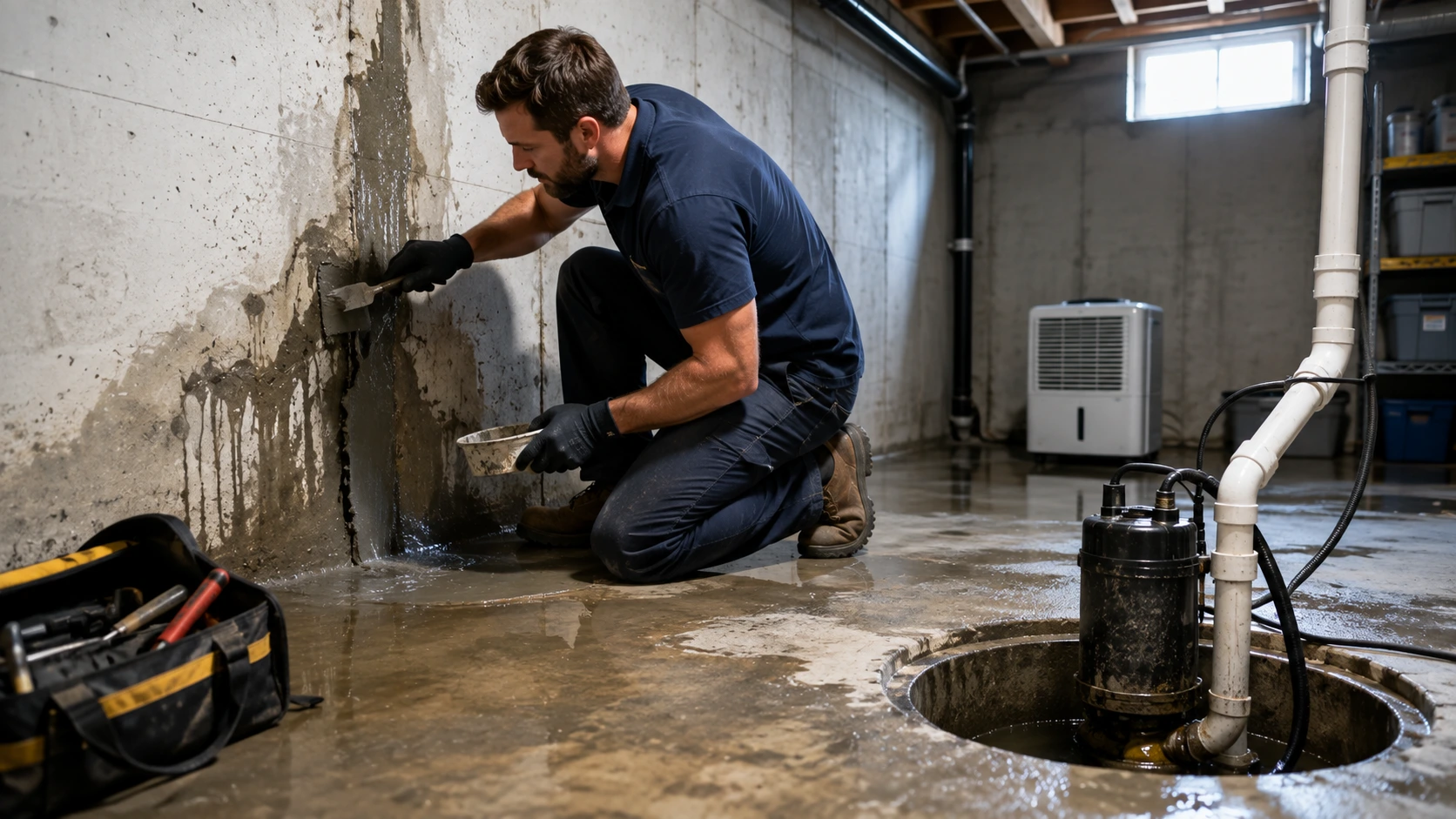
A wet basement is not just annoying. Left alone, water that gets in through cracks, walls, or the floor can cause mold, rot wood framing, damage your belongings, and weaken the foundation over time. The longer it sits, the more it costs to fix.
The good news is that most basement water leaks can be repaired. The key is figuring out where the water is coming from and choosing the right fix for that specific cause. This guide walks you through exactly that.
What Causes Basement Water Leaks?
Water does not just appear in a basement on its own. It always has a source. These are the most common causes.
Foundation Cracks
Concrete is not waterproof. As a foundation settles and ages, small cracks form in the walls and floor. Water in the surrounding soil pushes against those cracks and finds its way in, especially during or after heavy rain. Hairline cracks are common and often manageable. Wider cracks or horizontal cracks in the wall are more serious and usually mean soil pressure is actively pushing against the foundation.
Poor Drainage Around the Foundation
If the ground around your home slopes toward the house instead of away from it, rainwater collects right against your foundation. Over time, that pooling water creates constant pressure on the walls and eventually finds a way in. This is one of the most common and most overlooked causes of basement leaks.
Hydrostatic Pressure
When the soil around your home becomes saturated with water, it builds up pressure against your foundation walls and floor. This is called hydrostatic pressure, and it is strong enough to push water through solid concrete. Homes in areas with high water tables or clay-heavy soil are especially vulnerable because clay holds moisture rather than letting it drain away.
Clogged Gutters and Downspouts
When gutters are clogged or downspouts drain too close to the house, every rainstorm dumps a large volume of water right against your foundation. Most homes have downspouts that end just one or two feet from the basement wall. That is enough to soak the soil and send water seeping through cracks in the foundation.
Cove Joint Seepage
The cove joint is the spot where the basement wall meets the floor. This joint is not bonded together the way the rest of the foundation is, which makes it one of the most common entry points for water. When groundwater levels rise after a heavy storm, water pushes up through this gap. You will usually see a thin line of water or wet concrete running along the base of the wall.
Signs of a Basement Water Leak
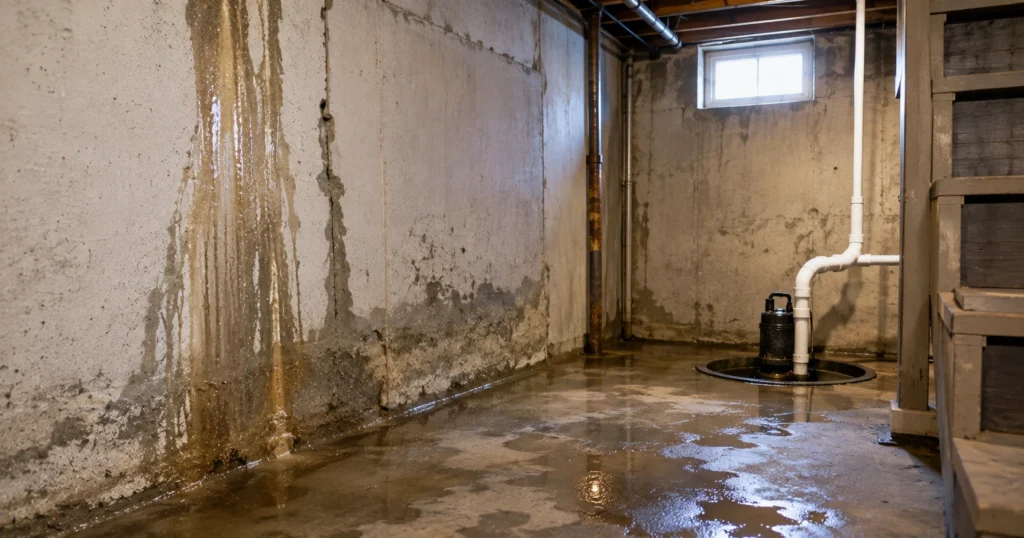
Not every basement leak shows up as a puddle on the floor. Water often works its way in slowly and quietly. Here are the signs to look for.
A musty or damp smell is usually the first sign something is wrong. That smell comes from moisture sitting in the walls, floor, or insulation, often before you can see any visible water. White chalky deposits on the concrete walls, called efflorescence, are another early sign. That white powder forms when water moves through concrete and leaves mineral deposits behind as it evaporates.
Other signs include: water stains or rust-colored streaks on the walls or floor, visible cracks in the foundation walls or floor, wet or damp insulation, peeling paint on basement walls, and mold or mildew growing in corners or on drywall. If you see any combination of these, water is getting in somewhere.
How to Find Where Your Basement Is Leaking From
Before you fix anything, you need to know where the water is actually coming from. There is a simple test that helps narrow it down.
Dry off a section of the damp wall. Tape a piece of aluminum foil or plastic sheeting tightly against the wall and leave it for 24 to 48 hours. If moisture collects on the side facing the wall, water is seeping through from outside. If moisture collects on the room-side of the foil, the problem is condensation from humid air inside the basement, not an actual leak.
For floor leaks, check where the water appears most. Is it along the wall at floor level? That points to the cove joint. Is it coming up through a crack in the middle of the floor? That suggests groundwater pressure from below. Is it only happening after heavy rain? That usually means drainage around the house is the problem. Knowing the pattern tells you a lot about the source.
How to Fix a Basement Water Leak
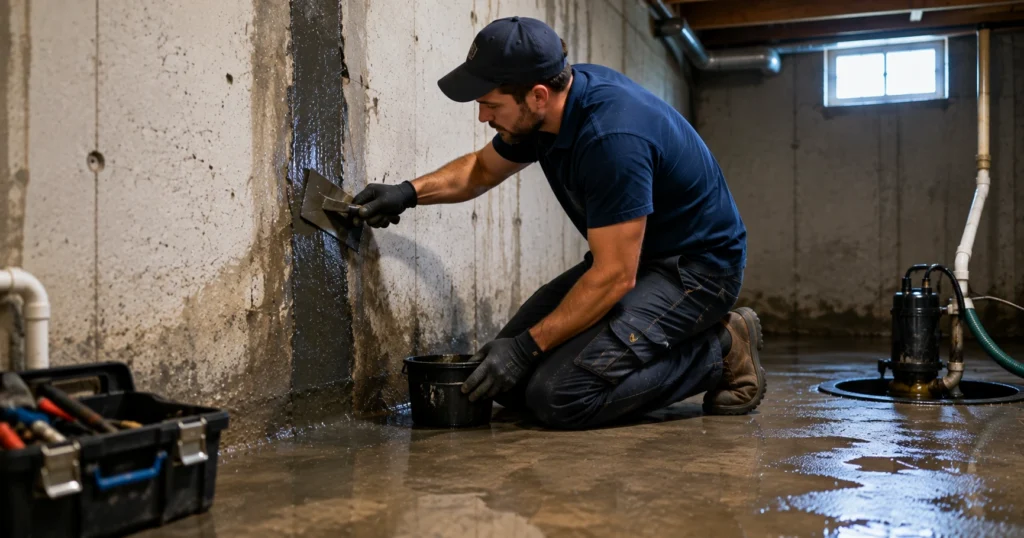
The right fix depends entirely on where the water is coming from and how severe the leak is. There is no one-size-fits-all solution for basement water leak repair.
Crack Injection (Epoxy and Polyurethane)
For active cracks in poured concrete walls, crack injection is the most targeted fix. A professional injects either epoxy or polyurethane foam into the crack under pressure. The material fills the crack completely from the inside out, creating a waterproof seal without any excavation.
Polyurethane is used for cracks that are actively leaking because it expands when it contacts water. Epoxy is used for dry cracks and provides a stronger structural bond. Both work well when the crack is stable and not continuing to grow.
Interior Drain Tile System
When water is entering through multiple points or along the cove joint, an interior drain tile system is one of the most effective long-term solutions. Contractors cut a channel along the perimeter of the basement floor, install a perforated pipe in the channel, and route it to a sump pump pit. Water that seeps through the walls or floor is captured by the pipe and pumped out before it can cause damage.
This system does not stop water from entering the foundation, but it manages it before it becomes a problem. It is especially effective in homes with chronic leaking that has not responded to crack repairs alone.
Exterior Waterproofing
Exterior waterproofing addresses the problem from the outside, which is where the water is actually coming from. Contractors excavate around the foundation, apply a waterproof membrane or coating directly to the exterior walls, and install drainage board to direct water downward and away from the foundation. This is the most thorough solution, but it is also the most expensive because of the excavation involved.
Most professionals recommend exterior waterproofing when the foundation is already showing significant damage or when interior methods have not worked.
Sump Pump Installation
A sump pump sits in a pit dug in the lowest part of the basement floor. As groundwater rises, it flows into the pit and the pump automatically pushes it out of the house through a discharge pipe. Sump pumps do not stop water from getting in, but they prevent it from accumulating and causing damage.
Most waterproofing systems include a sump pump as part of the overall solution. A battery backup is worth adding because the times when you need the pump most, during heavy storms, are also the times power is most likely to go out.
Regrading and Downspout Extensions
If poor drainage around the house is contributing to the leak, fixing the grade can make a big difference. The ground should slope away from the foundation by at least six inches over the first ten feet. Adding soil and sloping it away from the house redirects rainwater before it ever reaches the foundation.
Extending downspouts at least six feet from the house is another easy fix that most homeowners can do themselves. Flexible downspout extensions cost under $20 at any hardware store and can meaningfully reduce the amount of water reaching the foundation.
How Much Does Basement Water Leak Repair Cost?
Cost varies a lot depending on the cause of the leak and the method needed to fix it. A small crack repair is very different in cost from a full interior drain tile system.
Cost by Repair Method
Crack injection typically costs $250 to $800 per crack depending on the length and accessibility. Interior drain tile systems run $3,000 to $10,000 for a full basement installation. Exterior waterproofing is the most expensive option at $8,000 to $15,000 because of the excavation required.
Sump pump installation costs $600 to $2,000 including the pit and pump. Regrading the yard around the foundation runs $1,000 to $3,000 depending on how much soil needs to be moved. Full basement waterproofing combining multiple methods averages $4,500 to $15,000.
If mold has formed because of the water damage, mold remediation adds another $1,500 to $6,000 on top of the repair cost. Catching a basement leak early almost always means spending significantly less.
Can You Fix a Basement Water Leak Yourself?
Some basement water leak repairs are doable as DIY projects. Others are not.
Extending downspouts, cleaning gutters, and regrading the yard around the foundation are all things most homeowners can do themselves. These changes cost very little and can make a noticeable difference for leaks caused by poor drainage.
Small hairline cracks in poured concrete walls can be filled with a hydraulic cement or polyurethane caulk from a hardware store. This can slow or stop minor seepage. The catch is that these products seal the visible crack but do not fix what caused the crack in the first place. If soil pressure or settlement is behind it, the crack is likely to reopen.
Call a professional when you see horizontal cracks, bowing or leaning walls, cracks that keep coming back, water entering through multiple points, or any sign of mold. These are signs that the problem is beyond surface-level and needs proper assessment before any repair is attempted.
Frequently Asked Questions
How do I find exactly where my basement is leaking from?
Start by drying the damp area and taping a piece of plastic or foil tightly against the wall. Leave it for 24 to 48 hours. If moisture forms on the wall side, water is seeping through from outside. If moisture forms on the room side, it is condensation from indoor air. For floor leaks, note whether water appears along the base of the walls, through a specific crack, or spreads across the whole floor. Each pattern points to a different source and a different repair.
Can I fix a basement water leak myself or do I need a professional?
It depends on the cause. If the problem is poor drainage or gutters dumping water near the house, those are DIY-friendly fixes. If you have a hairline crack and the water is very minor, a hydraulic cement patch can help. But if water is coming through multiple points, the crack keeps reopening, or you see horizontal cracking or bowing in the walls, those need a professional. Trying to patch a structural problem with caulk usually just delays the inevitable and costs more in the long run.
Will homeowners insurance cover basement water leak repair?
Most standard homeowners insurance policies do not cover basement water leaks caused by groundwater, flooding, or poor drainage. These are generally considered maintenance issues. However, if the leak was caused by a sudden pipe burst inside the house, that is typically covered. Flood insurance through the National Flood Insurance Program covers flooding from outside the home but is a separate policy from standard homeowners coverage. Always check your specific policy before assuming you are covered.
Do crack sealants actually work or are they just a temporary fix?
Crack sealants can work permanently if the crack is stable and the underlying cause has been addressed. A professional-grade epoxy or polyurethane injection into a stable crack in poured concrete can be a lasting repair. The problem is that sealants only address the visible crack, not what caused it. If soil pressure, poor drainage, or settlement is behind the cracking, the wall will likely crack again nearby even after the original crack is sealed. That is why fixing the drainage or pressure issue alongside the crack repair matters.
How long does basement water leak repair take?
Simple crack injections take two to four hours for a professional to complete. Interior drain tile systems typically take one to three days depending on the size of the basement. Exterior waterproofing takes longer because of excavation, often two to five days for a full perimeter job. Regrading and downspout work can usually be done in a single day. The curing time for injected sealants and coatings is usually 24 to 48 hours before the area can get wet again.