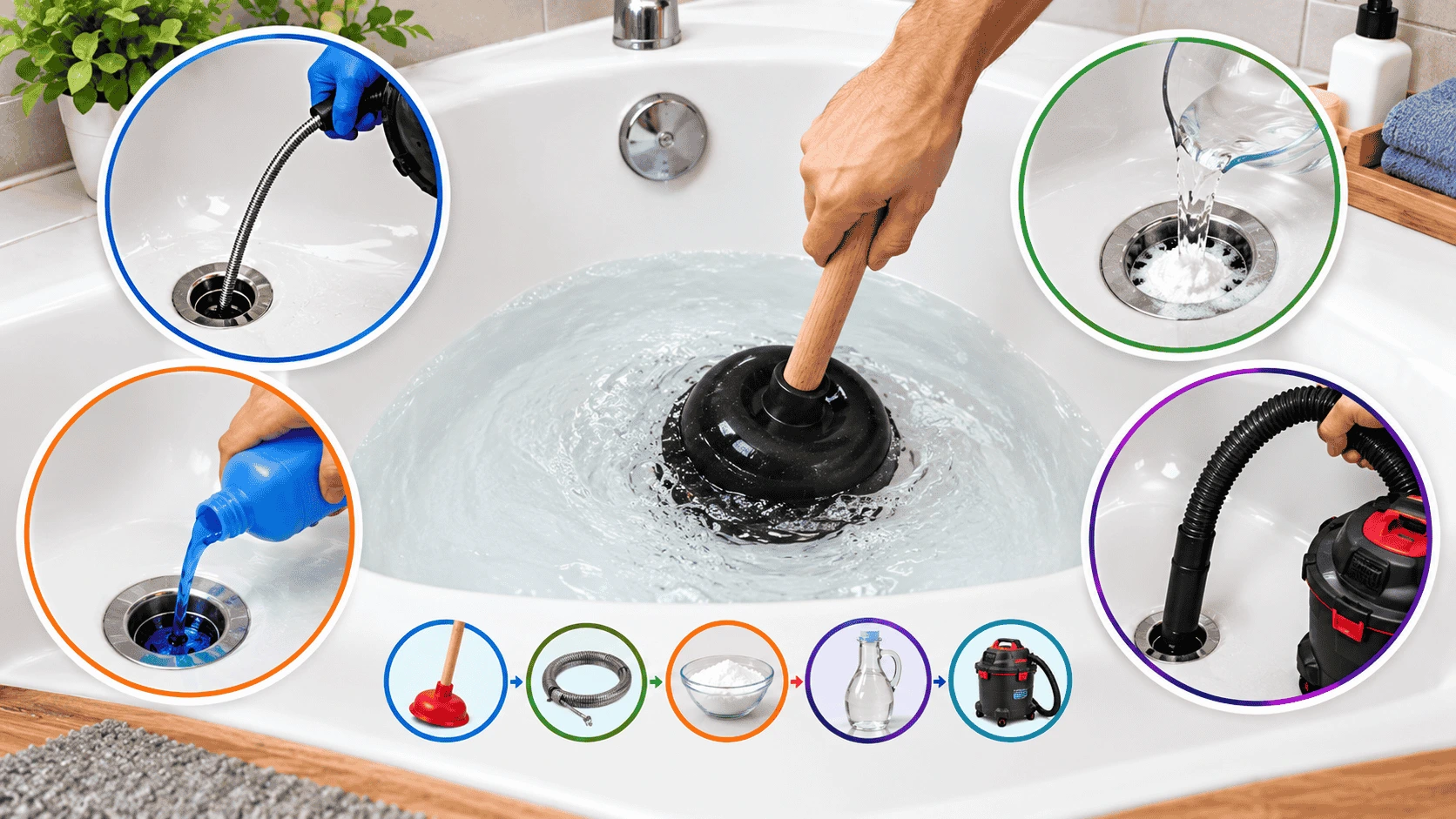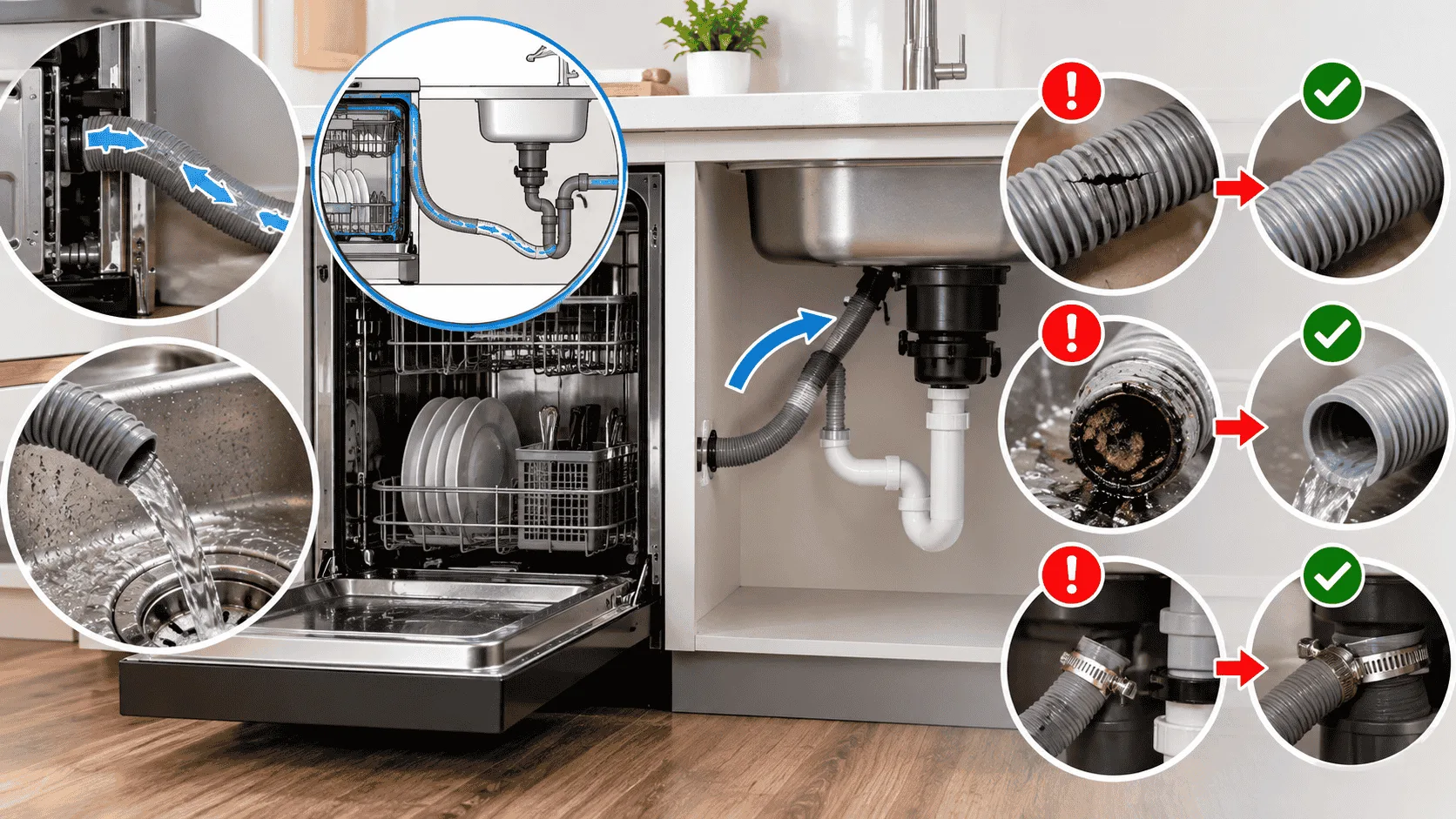



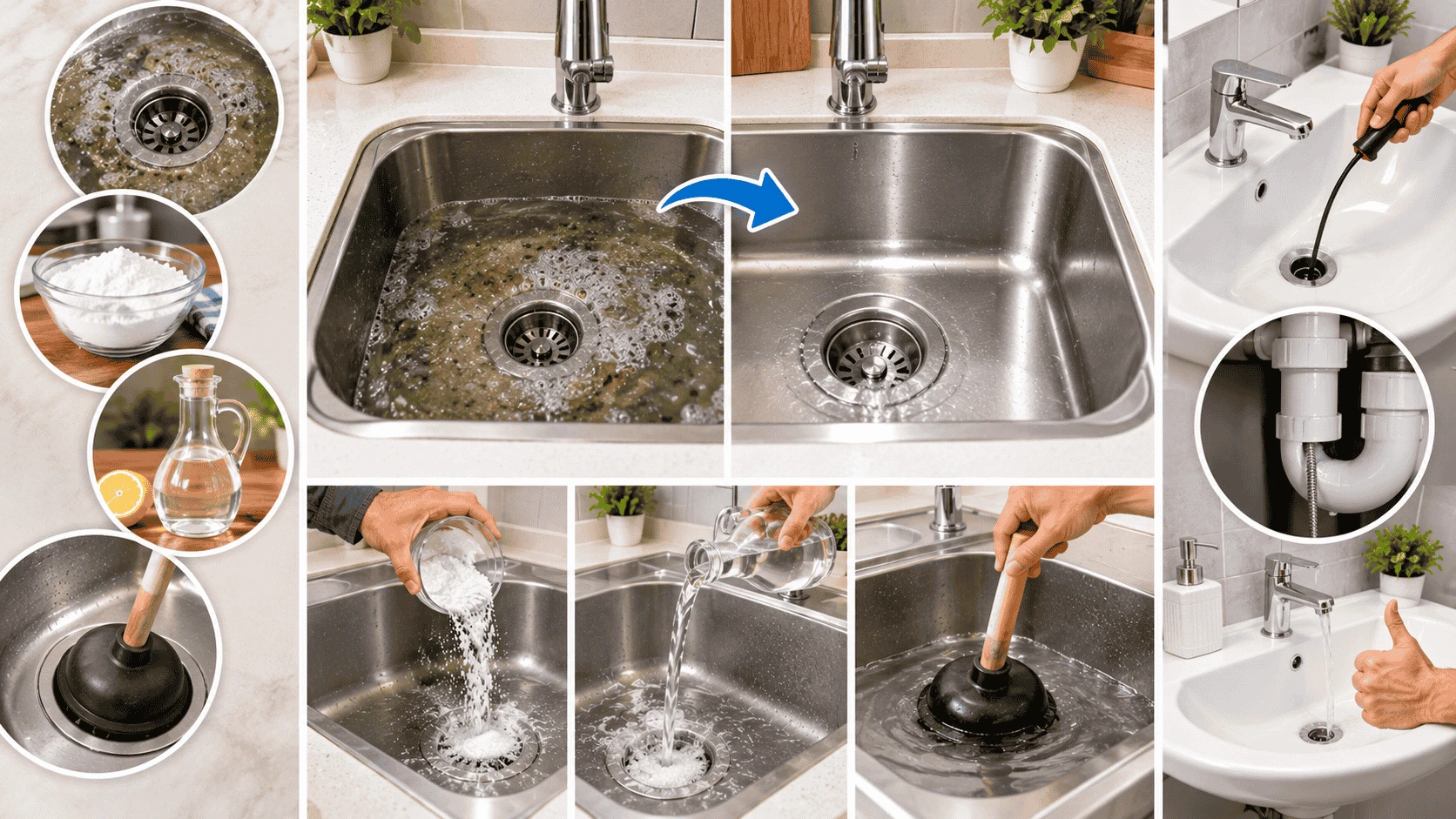
Water is left in the basin when you brush your teeth. Or the kitchen sink is filled up to two inches of gray water because you’re rinsing the pan. Your drain will drain, just not as quickly as usual. This is where you will decide to take matters into your own hands and fix that slow drain before it clogs completely.
How to fix slow draining sinks – Learn which sink you need to fix: bathroom hair and soap cause slow bathroom sinks. Food and grease cause slow kitchen sinks. These two different sinks need different fixes, which is why we have separated them here below.
Our licensed plumbers unclog both of these each week, and here is the exact process we follow.
Quick Answer
To learn how to fix slow draining sink problems fast, start simple:
- Dislodge the plug (bathroom) or examine the garbage disposal unit (kitchen).
- After sealing off the overflow hole or second basin, plunge the drain.
- Remove the P-trap under the cabinet and clean it.
Pull out the hair from the plug to make most bathroom drains drain freely. Use a drain auger to reach the wall pipe to break up any grease or to clean the P-trap to make most kitchen drains drain freely.
What Causes a Slow Draining Sink?
A how to fix slow draining sink usually means that there is some form of partial obstruction in the first few feet of the pipe.
- Hair and Soap Scum (Sink): Hair becomes entangled in a large plug consisting of soap scum, toothpaste and shaving cream.
- Grease and Food Residue (Kitchen Sink): Due to cold pipe walls, the cooking fat remains cold and sticks to the walls where it holds on to coffee grounds, rice and other food particles. In case of a thick layer of grease build-up, regular snaking might only drill a hole, so hydro jetting would be required to clear the pipe wall.
- Clogged P-Trap: The U-shape of your pipe trap under your sink collects heavy debris, lost items, and sludge.
- Poor venting: Leaves and bird nests clog your vent pipe at the top of your roof, which blocks the airflow and causes slow drainage and gurgling sounds.
Pipe size matters too. Bathroom sinks use smaller 114-inch traps, while kitchen sinks use 112-inch traps. Because bathroom pipes are narrower, even a small clump of hair can block a large portion of the drain.
| Symptom | Likely Cause | Where to Start |
|---|---|---|
| Bathroom sink slow, no smell | Hair on the stopper | Pull and clean the stopper |
| Kitchen sink slow on one side | Disposal or grease at trap | Check disposal, then clean trap. |
| Both kitchen basins slow | Clog past the tee or in wall | Clean trap, then snake line |
| Gurgling sound after cleaning | Blocked roof vent | Call a licensed plumber |
| Multiple drains slow at once | Main sewer line clog | Call a licensed plumber |
If persistent blockages return after DIY attempts, schedule a high-definition camera drain inspection to locate hidden pipe defects or foreign obstacles. For stubborn grease, sludge, or recurring buildup, professional drain cleaning may help clear the line more thoroughly.
How to Fix a Slow Draining Bathroom Sink
When you want to learn how to fix a clogged sink drain, begin from above. Clogs usually occur either around or just under the drain stopper.
(Note: Hair clogs aren’t exclusive to the sink. If your shower or tub also happens to be backing up, check out our ranking of the best ways to unclog a shower drain.
Step 1: Remove and Clean the Pop-Up Stopper
- Position a bucket and towel beneath the sink.
- Reach beneath the basin and loosen the pivot nut that secures the horizontal rod.
- Pull the rod towards you and then take the stopper out from the top.
- Clear hair and sludge with an old toothbrush and hot water.
- Clean out the drain. Replace the stopper and re-tighten the pivot rod nut if water drains easily.
Step 2: Use Baking Soda and Vinegar
If the drain is only slightly slow, pour 12 cup of baking soda into the drain, followed by 1 cup of white vinegar. Cover the opening with a damp cloth for 15 minutes to let the natural fizzing action loosen light soap film, then flush with hot tap water.
Step 3: Plunge the drain
Want to learn how to unclog bathroom sink drain without taking the pipes apart? Here is a small cup plunger:
- Disengage the stopper.
- Place a damp towel over the overflow opening to prevent air from being released.
- Fill the sink with 1 to 2 inches of water.
- Plunge straight up and down 15 to 20 times with some force, then pull up sharply.
Step 4: Clean the P-Trap
- Place a bucket beneath the U-pipe that is present beneath the sink.
- Use your hand or some pliers to loosen both slip nuts.
- Remove the trap, dump out the gunk collected in it, clean the trap and then replace it in its position.
How to Unclog a Kitchen Sink
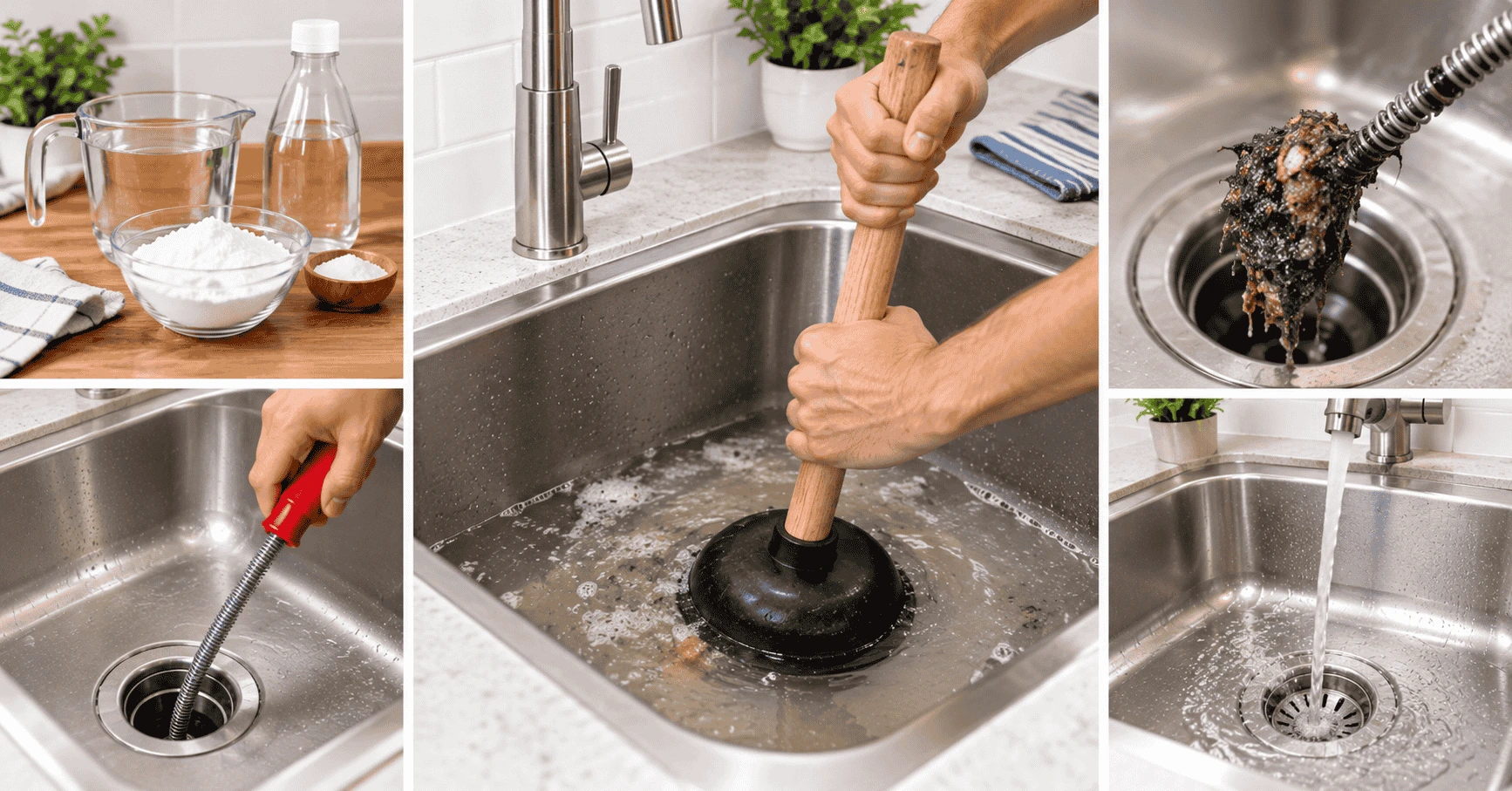
Because a kitchen sink clogged with grease behaves differently than a hair clog, you need a slightly different approach to master how to unclog kitchen sink issues in the kitchen.
Step 1: Clear the Garbage Disposal First
In case your sink contains a disposal unit on one side, there might be food particles trapped within:
- Unplug your machine first and don’t put your hands inside.
- If there is any food that is jammed inside, illuminate it using a torch and remove it with tongs.
- Insert an Allen wrench of size 14 inches into the center socket at the bottom and turn it.
- Press the red button below and then power on your machine.
Step 2: Plunge Both Sides of the Sink
To unclog sink drains in a double-basin kitchen setup:
- Put a stopper or wet rag into the other drain so that there is no escape of air pressure through it.
- Clamp your dishwasher, if you have one, to avoid having the dirty water splash into the dishwasher.
- Put water into the blocked drain and let it get to the level of 2 inches of water.
Step 3: Clean the Kitchen P-Trap
Traps in the kitchen tend to be bigger because there is more buildup of denser grease. Unfasten the slip nuts, remove the P-trap, and place it in a bucket, scrubbing off any food debris that is caked on.
Step 4: Use a Drain Snake or Auger
If both basins stay full after cleaning the trap, the clog sits further inside the wall pipe.
- Keep the P-trap removed.
- Feed a 14-inch hand auger cable directly into the wall pipe until you feel resistance.
- Rotate the crank handle clockwise while pushing gently forward to break through or hook the grease mass.
- Pull the cable back slowly, wipe off debris, reassemble the trap, and flush with hot water.
How to Unclog a Sink Without Chemicals?
We tend to make use of mechanical equipment rather than strong liquid drain cleaners. The chemical cleaners available commercially do not work well on large clumps of hair; they may corrode older pipes made of metal and may splash if you are plunging or disassembling the pipe.
| Method | Best Used For | Estimated Time | Tool Cost | Pipe Damage Risk |
|---|---|---|---|---|
| Plastic Barb Tool | Hair wrapped on stoppers | 5 minutes | Under $5 | None |
| Cup Plunger | Soft clogs in any sink | 5–10 minutes | ~$10 | None |
| P-Trap Cleaning | Heavy grease & settled debris | 20–30 minutes | Free | Very Low |
| Hand Drain Auger | Deep blockages past the wall | 20–40 minutes | 15–35 | Low (if not forced) |
| Baking Soda & Vinegar | Drain odors & light film | 20 minutes | Under $2 | None |
When to Call a Plumber for a Slow Draining Sink?
However, if you fail to sort out the problem through a DIY approach on how to fix slow draining sink and you start experiencing backups in other drains such as the toilet (check out our guide on how to unblock a toilet), then it is about time to get some professional plumbing service.
The Plumb Hero is an independent plumbing firm based in Norcross, Georgia. We have licensed and insured master plumbers who will be at your service anywhere between Duluth and Johns Creek, or Alpharetta and Buford and Loganville. For recurring drain problems or blockages affecting multiple fixtures, our sewer line services can help identify the next steps.
We diagnose first before we quote, quote before we work, and everything we do comes with a written guarantee: slow drain cleaning, plugged drain cleaning, clogged drain repair and 24-hour emergency service.
Contact Us:
- Telephone Number: (470) 602-9246
- Location: 6089 Oakbrook Pkwy, Norcross, GA 30093
- Area Covered: Metro Atlanta and Gwinnett County
Call (470) 602-9246 or request service online today!
Frequently Asked Questions
Why is my sink draining slowly but not clogged?
Your sink might be draining slowly even if it isn’t clogged due to problems with your overflow, stopper retraction, film buildup inside your P-trap or a clogged vent. Check the height of your stopper and overflow. If your sink gurgles, the vent is the problem, and a plumber should unblock the vent from the roof.
Can I use Drano in a slow draining sink?
Mechanically, we provide a drain opener for slow drains, and it is fine for a few organic soft blockages. Do not use Drano or anything similar for a slow drain. Caustic chemical cleaners: Not likely to effectively dissolve hair; they damage traditional metal pipes over time and may become dangerous if you have to plunge or snake the drain, as they did not solve the issue.
What is the fastest way to unclog a sink?
The fastest method to unclog the bathroom sink is to remove hair and the pop-up stopper (a five-minute solution). The fastest solution to unclog the kitchen sink is to plunge using the second basin clamp (a 10-minute solution). If they do not work, clean your P-trap.
Why does my kitchen sink drain slowly on both sides?
1 Double kitchen sink drain failure: both sides of a double kitchen sink drain through one drain pipe past the tee. If the sink drains slowly on both sides, the problem lies in either the common trap or in the pipe in the wall; however, not in either sink. Start by cleaning the trap, and then snake the drain into the wall pipe. Grease is the usual culprit.
How do I stop my bathroom sink from draining slowly again?
Clean the plug and ring once per month. Install a mesh drain screen if possible for your plug. Flush the basin after shaving to remove the hair from the drain. Flush the drain once a week with hot tap water; flush monthly with enzyme cleaner. If you have persistently slow draining in your whole house, you should have a professional sewer line inspection for possible line breaks.