


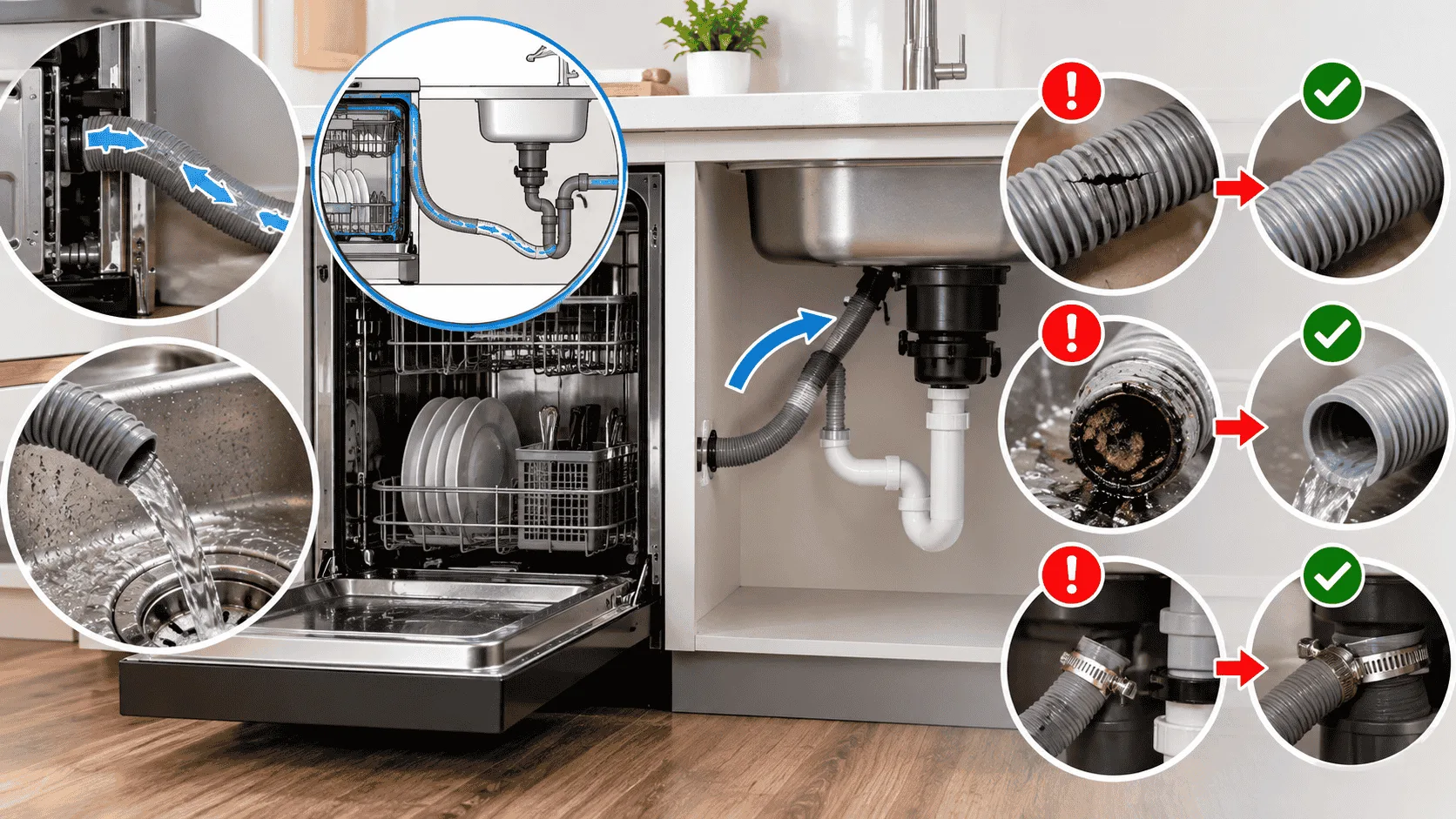
What is a dishwasher drain hose? This is an item that you come across on a daily basis. Here is what a dishwasher drain hose is and what it does. The drain hose is the pipe through which the used water moves from the dishwasher to either the kitchen sink or the garbage disposal. All issues such as backflow and slow drainage can be caused by a clogged hose. If water is draining slowly, professional drain cleaning services may help address blockages in the connected plumbing.
When your dishwasher finishes washing, you might open the door and find dirty, smelly water stuck at the bottom. Homeowners face this problem all the time. Most of the time, the cause is just one thing: when we get a call from homeowners in Norcross, Duluth, or Peachtree Corners, it’s a clogged or bent plastic tube behind the machine called the dishwasher drain hose.
It is just an ordinary hose, but it will endure in your dishwasher if it is properly put together and taken care of. This article will inform you of everything there is to know about the hose that is found inside your dishwasher, what leads to the blockage, and how to solve it.
What Is a Dishwasher Drain Hose and What Does It Do?
The term dishwasher drain hose, or dishwasher discharge hose, is a simple, flexible plastic pipe that attaches your dishwasher to the home plumbing system.
Think of it as a straw for dirty water:
- One end is fixed to the drain pump at the base of your dishwasher.
- The other end is attached to your garbage disposal or the drain pipe of the sink.
What does it do:
What it does is very simple but vital for your dishwasher: it removes the filthy wastewater from the machine after each wash.
Here is the step-by-step process of what happens during a wash cycle.
- Washing: Your dishwasher sprays soap and hot water onto the dishes.
- Collecting: The dirty water and bits of food sink to the bottom of the tub.
- Pumping: The drain pump in your dishwasher activates and forces the dirty water into the drain hose.
- Drainage: This flows down through the house, under the sink, and safely exits into the main sewer lines of your home.
Why is it so important?
It’s just a plastic pipe that isn’t really costly, but, as you probably know, when it is damaged, your entire dishwasher is useless.
- Water backs up: Dirty water has no way out, so the dishes stay dirty or wet.
- If it gets bent or kinked: Water runs too slowly, which means your dishes come out dirty or wet.
- If you messed up the installation: Dirty sink water may even flow backwards into your clean dishwasher!
If water continues backing up even after you inspect the hose, a professional clogged drain repair service can help determine whether the problem is in the connected drain line rather than the appliance itself.
High Loop vs. Air Gap Installation
Avoid dirty water from flowing back into your dishwasher. Depending on local plumbing requirements and the dishwasher installation, a high loop or an air gap may be used below the kitchen sink.
1. High loop installation:
What is it? You will have to elevate the drain hose high under the countertop and secure it according to the dishwasher manufacturer’s instructions and applicable plumbing code before attaching it to your drain or garbage disposal.
How does it work? The elevated hose helps prevent contaminated sink water from flowing back into the dishwasher.
2. Air gap installation:
It is made of chrome and fits on top of your sink or counter with the help of some screws.
The drain hose from the dishwasher connects to the air gap, while another drain hose also connects to it and leads to the garbage disposal.
How it works: It provides an actual air gap that helps keep dirty water from being siphoned back into your dishwasher.
Common Installation Mistakes That Cause Drain Problems
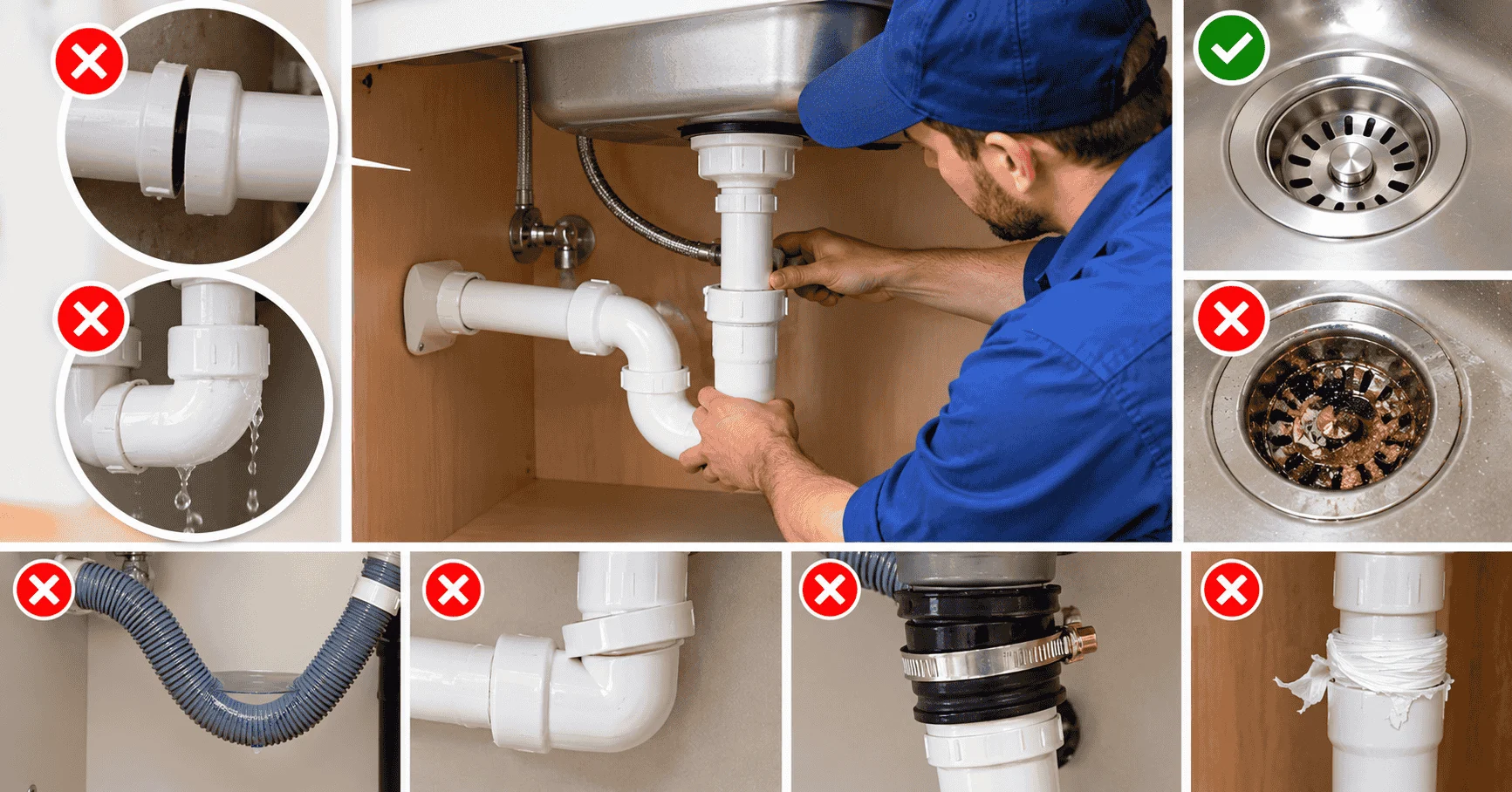
When installing a dishwasher drain hose, three simple mistakes cause many draining problems:
- Forgetting the Garbage Disposal Knockout Plug: New garbage disposals commonly have a knockout plug inside the dishwasher drain inlet. The dirty water will not flow out properly if the plug is not removed before installing the hose.
- Letting the Hose Sag: When the hose is allowed to sag on the floor of the cabinet, wastewater and food particles can collect in low points, contributing to blockages and foul smells. If the blockage extends into the drain line, professional drain cleaning may be necessary.
- Kinking or Crushing the Hose: Placing the dishwasher against the back wall may cause the hose to kink or become crushed, restricting water flow.
Why Is My Dishwasher Not Draining?
Your dishwasher won’t drain, and there is some water at the bottom, but you shouldn’t worry immediately. There are several possible reasons why the draining process fails.
1. Kinked or Clogged Drain Hose
- The issue: The hose has food debris, grease, or soap buildup on its inner walls, leading to a clog, or the space between the dishwasher and the wall is too small, pinching the flexible plastic hose.
- The consequence: There is no way for water to flow properly through a bent or blocked hose; therefore, dirty water remains in the dishwasher.
If the blockage is not limited to the hose, The Plumb Hero’s clogged drain repair service can help investigate the connected drain system.
2. Blocked Drain Filter
- The issue: The drain filter is located under the lower rack and at the bottom of the dishwasher. It traps large chunks of food to prevent them from entering the dishwasher pump.
- The consequence: Failure to clean the drain filter can clog the path of water to the drain pump with large food particles, labels, or glass.
For blockages in the connected household drain pipes, learn more about professional drain cleaning.
3. Clogged Garbage Disposal Knockout Plug
- The issue: When a garbage disposal is replaced, there may be a plastic disc in the disposal’s dishwasher drain inlet. It must be knocked out before attaching the hose.
- The consequence: Water cannot reach the garbage disposal because it hits a solid plastic barrier if the knockout plug was not removed.
4. Faulty Drain Pump
- The issue: There is an electric motor in the drain pump that drives the impeller and makes it discharge water through the hose.
- The consequence: The hose will not discharge water properly if the pump motor fails. Glass or other debris may also obstruct the pump. If the appliance itself is working but the connected plumbing is blocked, you may need professional clogged drain repair.
5. Clogged Air Gap Cylinder
- The issue: There is a chrome air gap device on some kitchen sinks that can trap food and grease inside the cylinder.
- The consequence: If the air gap becomes blocked, water cannot flow properly to the garbage disposal and may spill onto the countertop or into the sink.
Water in Bottom of Dishwasher After Cycle: What It Means
The presence of some residual water at the bottom of the machine after a complete wash cycle is not uncommon and may occur without a malfunction. The amount and location of the water determine whether further investigation is needed.
- Normal: A small amount of clear water in the filter well or sump may be normal, depending on the dishwasher model.
- Abnormal: A large pool of dirty, standing water indicates that the dishwasher may not be draining properly.
If dirty water remains after checking the appliance filter and hose, the connected plumbing may also need inspection. The Plumb Hero offers camera drain inspection to help identify blockages and other problems in accessible drain lines.
How to Clear a Clogged Dishwasher Drain Hose (Step by Step)
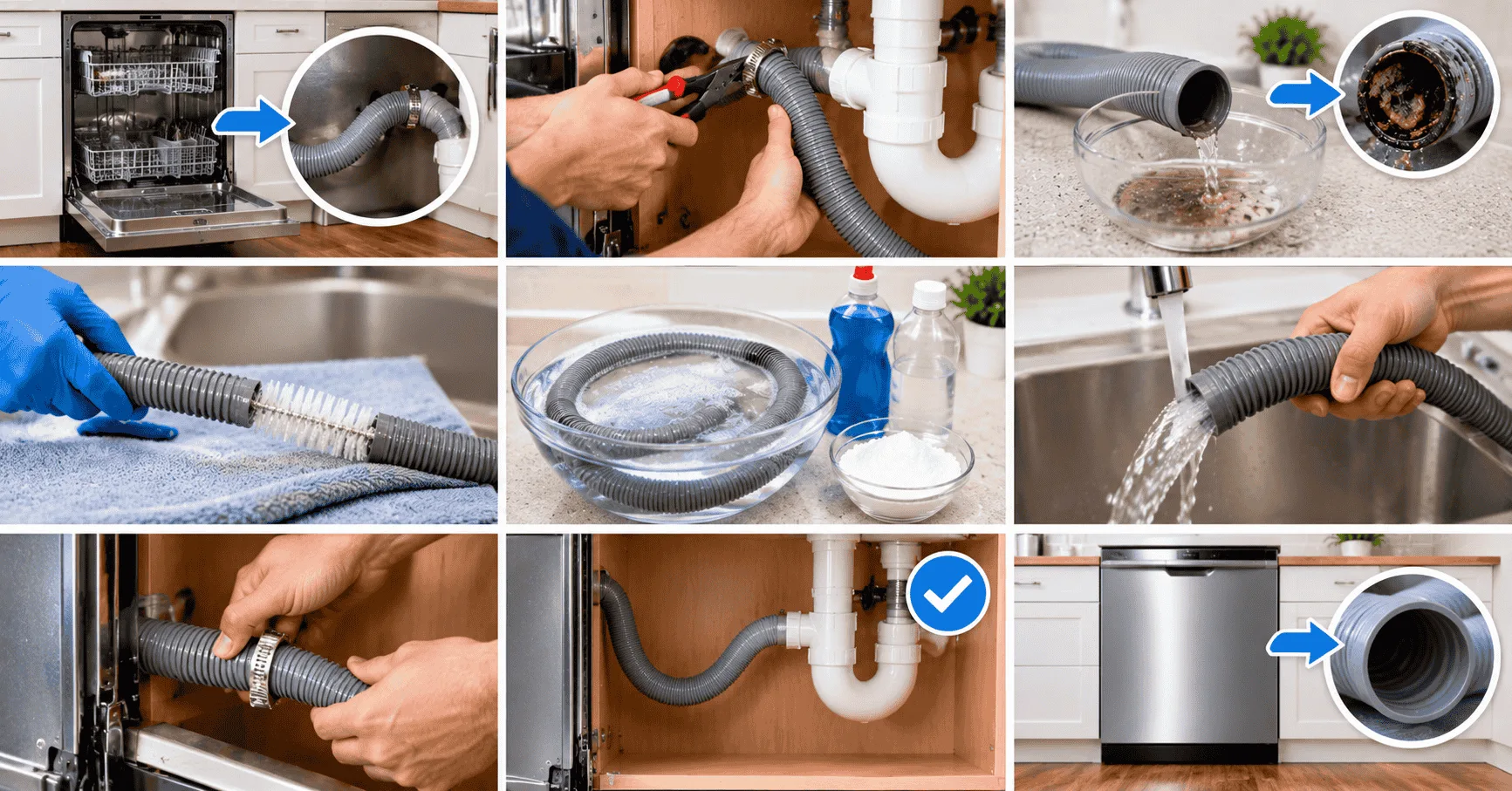
Unclogging a dishwasher drain hose may be a manageable DIY task when the blockage is accessible and the manufacturer’s instructions allow it. Try these steps before arranging professional service.
Tools and Materials Needed:
- Bucket and old towels
- Screwdriver and pliers
- A suitable flexible drain-cleaning tool
- Sponge or cup to remove standing water
Step 1: Turn Off the Power and Water
To reduce the risk of electric shock, disconnect the dishwasher from its power supply or switch off the correct circuit breaker. Shut off the water supply valve before working on the appliance.
Step 2: Remove Standing Water
Open the dishwasher door and remove standing water with a cup or sponge, placing it in a bucket.
Step 3: Check and Clean the Drain Filter
- Take out the lower rack in the dishwasher.
- Remove the filter according to the manufacturer’s instructions.
- Wash the filter thoroughly and remove accumulated food debris.
Step 4: Access and Inspect the Drain Hose
- Inspect the hose where it connects to the garbage disposal or drain pipe.
- Look for kinks, sagging, dips, or signs of damage.
Step 5: Disconnect the Hose and Drain Into a Bucket
- Position a bucket below the point where the hose connects to the disposal or drain pipe.
- Carefully loosen the hose clamp using the appropriate tool.
- Drain the hose into the bucket.
Step 6: Clear the Blockage
Remove accessible debris using a suitable cleaning method recommended by the appliance manufacturer. Avoid forcing a wire coat hanger or rigid tool through the hose, as it can puncture or damage the tubing. Do not pour chemical drain cleaners into the dishwasher.
If the hose is clear but water still backs up, the obstruction may be farther along the drain line. Professional drain cleaning can help address stubborn plumbing blockages.
Step 7: Reconnect and Test
- Reattach the hose securely and tighten the clamp.
- Restore the water supply and power once all connections are secure.
- Run a short test cycle and check for leaks.
If the problem continues, avoid repeatedly running the dishwasher with standing dirty water. A plumber can assess whether the issue is in the appliance connection or the household drainage system.
When to Call a Plumber for Dishwasher Drain Problems
Many minor dishwasher drainage issues can be resolved by cleaning the filter or correcting a kink. Call a plumber if:
- The clog persists even after you clean the filter and inspect the hose.
- Water backs up into other fixtures, such as the shower or toilet. You can also review these guides on how to unclog a shower drain and unclog a toilet.
- Multiple fixtures back up simultaneously, which may indicate a larger main sewer line clog.
- You notice water leaking underneath cabinets or around nearby plumbing connections.
- The drain pump makes a loud grinding noise or does not run, indicating that an appliance technician may also be needed.
Conclusion
Checking for hose kinks and keeping the dishwasher filter clean will help prevent many draining issues. But if your dishwasher still won’t drain or you suspect a deeper pipe blockage, don’t wait for water damage to happen. The Plumb Hero can help investigate drainage issues with services such as camera drain inspection, professional drain cleaning, and clogged drain repair. For broader plumbing concerns, explore our plumbing services and repairs or contact The Plumb Hero to discuss your issue.
Frequently Asked Questions
Why does my dishwasher have standing water at the bottom?
If there is excessive standing water in the dishwasher, it may indicate a blocked drain filter, drain hose, garbage disposal connection, or a faulty drain pump. If the connected drain line is blocked, professional drain cleaning may help.
How do I know if my dishwasher drain hose is clogged?
A blocked dishwasher drain hose may cause dirty water to collect at the bottom of the dishwasher, slow drainage, unpleasant odors, and water flowing back into the sink. If these symptoms continue after checking the hose, consider clogged drain repair.
Does a dishwasher drain hose need a high loop?
A dishwasher generally needs an approved backflow-prevention arrangement, such as a high loop or air gap, depending on the manufacturer’s instructions and applicable plumbing code.
Can I replace a dishwasher drain hose myself?
Replacing a dishwasher drain hose may be possible for someone with the right tools and experience. Switch off the power and water supply, follow the manufacturer’s instructions, and make sure all connections are secure. If you are unsure, arrange professional help through The Plumb Hero’s plumbing services.
What is the difference between a dishwasher drain hose and discharge hose?
There is generally no difference. Both terms refer to the flexible hose that carries wastewater from the dishwasher’s drain pump to the household drain system. If you suspect an issue deeper in your home’s drainage pipes, consider a professional camera drain inspection to help identify the cause.