


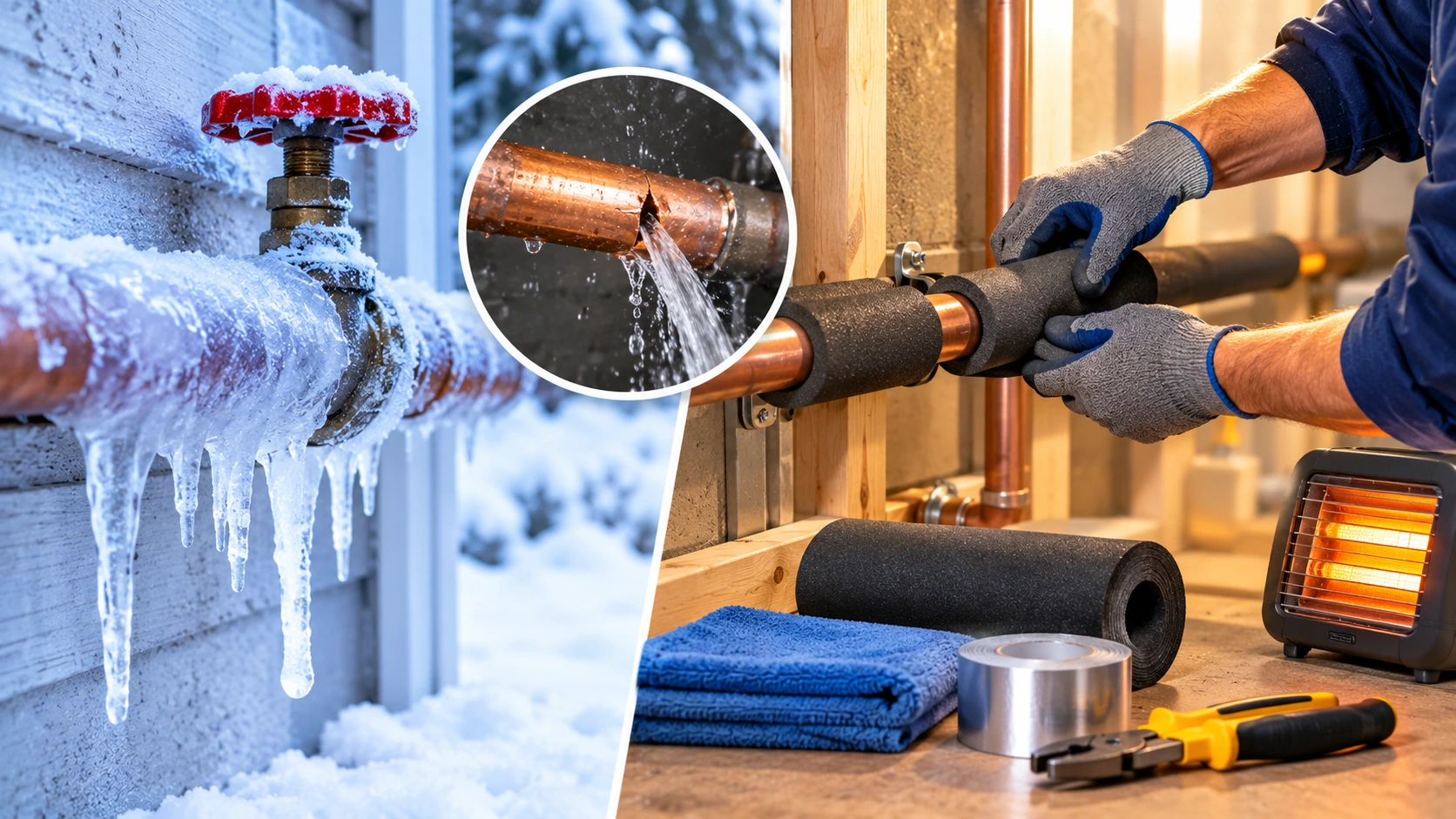
It’s a cold Georgia morning. You turn on the tap, and nothing comes out. Maybe a small trickle, then nothing.
Your pipes are frozen.
The ice isn’t the real problem, though. Water gets bigger when it freezes, and that can split the pipe. You won’t see the crack while it’s frozen. You’ll see it when it thaws, and water starts leaking into your wall or ceiling.
If you have frozen pipes in your house right now, don’t panic. And don’t grab a torch. Knowing how to fix frozen pipes the safe way can save you a lot of money.
So, let us now look into “How to Fix Frozen Pipes and Stop Them From Bursting“!
Quick Answer: How to Fix Frozen Pipes?
Not sure what to do with frozen pipes? Start here:
- Turn off the main water valve.
- Open the faucet on the frozen line, hot and cold.
- Warm the pipe slowly with a hair dryer, heating pad, or warm towels. Start near the faucet.
- See a crack, bulge, or leak? Stop and call a plumber.
Water off, faucet open, gentle heat. That’s the whole idea.
How to Tell If Pipes Are Frozen?
The tap tells you first. It worked yesterday. It got cold last night. Now there’s no water, or just a trickle.
Go check the pipes you can see. Under the sink, in the crawl space, along the garage wall. Frost on a pipe is a clear sign. So is a pipe that looks puffed up or has a thin crack.
Other signs to watch for:
- A bad smell coming up from the drain
- A toilet that won’t refill after you flush
- Strange gurgling or banging sounds when you turn on a tap
If only one tap is dry, the ice is likely in the pipe going to that tap. If the whole house is dry, the ice may be near where water comes into your home.
Why Do Pipes Freeze, Even in Georgia?
Most people think frozen pipes only happen up north. They don’t.
State Farm ranked Georgia No. 1 in the US for paid frozen pipe claims. About $100 million in just one year, from August 2022 to August 2023. That’s more than any northern state on its list.
Why here? Our homes aren’t built for long freezes. In a lot of Gwinnett, Cobb, and North Fulton homes, water pipes run through attics, crawl spaces, garages, and outside walls. Many have thin insulation. Some have none. That’s fine most winters. But when a real cold snap sits over Metro Atlanta for a night or two, those pipes are wide open.
Water freezes at 32°F. Pipes in cold, unheated spots are most at risk once it drops below about 20°F for a few hours.
Most plumbing frozen pipe problems start in the same places. Attics. Crawl spaces. Garages. Sinks on outside walls. Outdoor spigots.
What to Do Before You Start Thawing?
Turn off the main water first. In many homes here, the shutoff is in the crawl space or basement, near the water heater, or in a box by the street. If the pipe has already cracked, this stops a flood when the ice melts.
Next, open the faucet on the frozen line. Open both the hot and cold faucets. This gives melting water a way out and lowers the pressure inside the pipe.
Then find the frozen part. Follow the pipe back from the dry faucet until you find the cold, frosty spot.
Keep a bucket and some old towels close by, just in case.
How to Fix Frozen Pipes: Different Methods To Fix
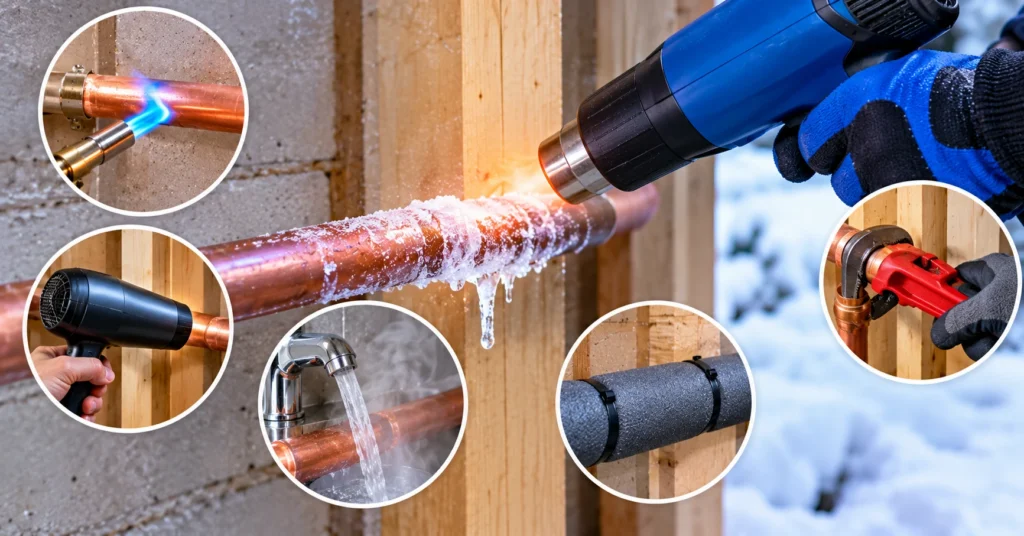
There are a few safe ways to thaw a pipe. Pick the one that fits where your pipe is.
Field note: Start near the faucet and work back toward the ice. If you heat the middle first, melted water can get stuck between two pieces of ice. The pressure builds, and the pipe can split.
Hair Dryer Method
This is the easiest way for most people.
Set it on low or medium. Move it back and forth along the pipe. Don’t hold it in one spot. It can take 30 minutes or more, so be patient. Keep the dryer away from any water on the floor.
Heating Pad or Electric Heat Tape
A heating pad wrapped around the pipe works well for short sections you can reach.
Heat tape is better for a pipe that freezes every winter. You wrap it on and plug it in. Some kinds turn on by themselves when it gets cold. Read the box first, because some can’t overlap and some aren’t made for plastic pipes.
Space Heater (Keep a Safe Distance)
Good for a cold space, like a crawl space or a closed sink cabinet.
Point it at the area, not right on the pipe. Keep it at least 3 feet from anything that can burn. Never leave it on when you walk away.
Warm Towels
Slow, but very safe. Soak towels in hot tap water, wring them out, and wrap them around the pipe. Swap them when they cool. Good for plastic pipes.
What Never to Use
These cause fires and burst pipes every winter:
- Open flames, blowtorches, or propane heaters. A fire can start inside your wall where you can’t see it.
- Boiling water. Sudden heat can crack a cold pipe, especially a plastic one.
- A hammer. Hitting the pipe to break the ice just breaks the pipe.
Thawing frozen water pipes takes time. Rush it, and you’ll need to repair frozen water pipes instead of just thawing them.
What to Do After the Pipe Thaws?
Water’s back. Good. But you’re not done yet.
A homeowner on Reddit’s r/homeowners asked this exact question. Their pipes froze and burst, a plumber fixed it, and then they wondered, “Now what?” It’s a smart question, because a lot of leaks show up hours after the thaw.
Here’s what to do:
- Turn the main water back on slowly
- Look at the pipe you thawed, and the walls and ceilings around it
- Listen for dripping or hissing
- Check water pressure at a few taps. Weak pressure can mean more ice or a hidden plumbing leak.
- Test your other faucets. When one pipe freezes, others nearby often freeze too.
Keep checking for a day or two. Small cracks don’t always leak right away.
Find a leak? Turn the main water off again and call a plumber.
How to Thaw Frozen Pipes Inside Walls or Underground?
This is much harder, because you can’t reach the pipe.
Pipes inside walls: Warm the room instead. Turn the heat up a few degrees. Open cabinets on that wall. Point a space heater toward the wall from a safe distance. If there’s still no water after a few hours, call a plumber before you cut into drywall.
Pipes underground: Wondering how to thaw frozen pipes underground? Don’t try it yourself. Buried pipes need special equipment that sends heat through the pipe from the inside. Nothing you put on the ground will reach it.
Call a plumber right away if the pipe is buried, you can’t find the frozen spot, or the water still isn’t back after a few hours.
What Happens When Frozen Pipes Burst?
When water freezes, it gets about 9% bigger. Inside a pipe, there’s no room for that. Pressure builds until the pipe cracks.
And it doesn’t take a big crack. State Farm says a small one can leak more than 250 gallons of water a day.
Frozen pipes burst quietly. You may not know until you see:
- Water stains on the ceiling or walls
- Puddles on the floor
- A sudden drop in water pressure
- The sound of running water when nothing is on
- A water bill that’s much higher than normal
If a pipe bursts, do this right away:
- Shut off the main water valve.
- Turn off power to any wet area, but only if you can reach the breaker without stepping in water.
- Open your faucets to drain the pipes.
- Take photos and videos before you clean. Your insurance company will want them.
- Dry everything fast with towels, a wet vac, fans, and a dehumidifier.
Don’t wait on the drying. Mold can start to grow within 24 to 48 hours in wet drywall, carpet, and insulation. If water got into walls or under floors, you may need a water damage company. For urgent leaks, our Emergency Water Leak Repair team can help.
A Marietta homeowner learned this during the December 2022 freeze. He had lived in his home for 32 years with no problems. So his family skipped the usual prep before leaving for the holiday weekend. A pipe burst while they were away.
Fixing Frozen Pipes Yourself vs Calling a Plumber
Some frozen pipes repair jobs are fine to do yourself. Others aren’t.
| Fix | DIY okay? | Call a plumber when… |
|---|---|---|
| Hair dryer / warm towels | Yes | You can’t find the ice, or nothing changes after a few hours |
| Heat tape | Yes, if you follow the instructions | The pipe is hard to reach, or you’re not sure which tape to use |
| Pipe repair clamp | Short-term only, on a small crack | Always, for the real fix |
| Replacing a burst section | No | Always |
| Pipes in walls or underground | No | Always |
A pipe clamp can hold a small crack for a day or two while you wait for help. It’s a quick patch, not a real fix. The damaged part still needs to be replaced.
How Much Does It Cost to Fix Frozen Pipes?
How much does it cost to fix frozen pipes? It depends on the damage.
- Thawing only, no damage: $100–$300
- Fixing a burst pipe: $250–$800, more if the pipe is in a wall, under a slab, or hard to reach
- Water damage cleanup: can run into thousands
Water damage is where the cost really adds up. State Farm’s average frozen pipe claim was more than $30,000, across over 20,000 claims from 2024 to mid-2025. A few things push the price up:
- After-hours calls. In Atlanta, emergency plumbing often runs 1.5 to 2 times the normal rate on evenings and weekends, and more on holidays. Pipes tend to freeze overnight, so this comes up a lot.
- Hard-to-reach pipes. Cutting into drywall or digging into a slab adds time and cost.
- Water damage. Drying and repairs usually cost far more than fixing the pipe itself. Mold cleanup adds even more.
Late-night and weekend calls cost more too. And that’s usually when pipes freeze.
The cheapest fix is catching it early.
Does Homeowners Insurance Cover Frozen Pipes?
Does homeowners insurance cover frozen pipes? Most of the time, yes, if the pipe burst suddenly and by accident.
Most policies pay for the water damage. Ruined floors, walls, and belongings. Some don’t pay to replace the pipe itself.
Claims are more likely to be denied when:
- The house was left with no heat
- The home sat empty for a long time with the water still on
- The insurance company decides it was neglect
To protect your claim, take photos and videos before cleaning. Call your insurance company fast. Keep every receipt. And stop more damage by turning off the water and drying things out.
Every policy is different. Check yours or talk to your agent to be sure.
How to Stop Pipes From Freezing and Bursting?
The best frozen pipe is the one that never freezes. Here’s how to prevent frozen pipes before the next cold snap:
Insulate Exposed Pipes
Foam pipe sleeves cost a few dollars and slide right on. Cover pipes in the attic, crawl space, garage, and under sinks on outside walls.
If you only do one thing, do this.
Let Faucets Drip
On freezing nights, let faucets on outside walls drip slowly. Hot and cold. Moving water is much harder to freeze.
During the 2022 cold snap, a Tucker homeowner lost her hot water when a line froze. Her plumber said a dripping faucet would likely have saved it.
Keep Cabinet Doors Open
Pipes under sinks sit in a small, closed, cold space. Open the doors so warm air from the house can get in. Move cleaning products out of reach of kids and pets first.
Keep the Thermostat Steady Day and Night
Don’t drop the heat a lot at night or while you’re at work. Keep it at 55°F or higher, day and night. Steady heat matters more than saving a little on the bill.
Disconnect Outdoor Hoses
Easy to forget. A hose left on the spigot holds water, and that water can freeze back into the pipe inside your wall. Unhook it, drain it, and cover the outdoor faucet.
Seal Cracks and Gaps
Cold air sneaking in can freeze a pipe that’s otherwise fine. Check around dryer vents, cable lines, crawl space vents, and where pipes go through walls. Use caulk or spray foam to seal them.
Use Heat Tape on Problem Pipes
One pipe freezes every year? Put heat tape on it.
Prepare Your Home Before You Travel
A lot of the worst damage happens when nobody’s home.
Before you leave in cold weather:
- Keep the heat at 55°F or higher.
- Open cabinet doors
- Ask someone to check on the house.
- Think about shutting off the main water and draining the lines. But if your home has fire sprinklers, this turns them off too.
A smart leak detector or automatic water shutoff is worth a look if you travel a lot in winter.
Preventing frozen pipes is mostly about small steps before the cold arrives. And avoiding frozen pipes costs far less than drying out a flooded floor.
When to Call a Plumber for Frozen Pipes?
Call a plumber for frozen pipes if:
- You can’t find the frozen part
- The pipe is cracked, bulging, or leaking
- The pipe is inside a wall, ceiling, or underground
- Several taps have no water
- You’ve tried thawing for a few hours and still nothing
A frozen pipes plumber has tools you don’t. Thermal cameras can find ice you can’t see. Professional thawing equipment is faster and much safer.
Frozen Pipe Repair in Norcross and Metro Atlanta: The Plumb Hero
Frozen pipes don’t wait for business hours. Neither do we.
At The Plumb Hero, our licensed master plumbers offer 24/7 emergency service across Metro Atlanta. We thaw frozen pipes safely, fix burst lines, and help you get ready before the next freeze.
We serve Norcross, Duluth, Alpharetta, Buford, Johns Creek, Marietta, and nearby areas.
We also offer Water Line Repair Services, full Plumbing Services & Repairs, and fast Emergency Water Leak Repair.
Frozen or burst pipe right now? Call (470) 602-9246.
Frequently Asked Questions
How do you fix frozen pipes fast?
Get the water off at the main, open the tap, and put a hair dryer on the pipe close to the faucet. That’s usually the quickest safe way.
People try to speed it up with more heat. That backfires. A pipe heated too fast can split, and then you’ve got a leak on top of a frozen pipe.
Can you fix a frozen pipe without a plumber?
Plenty of homeowners do. A pipe under the kitchen sink or along the garage wall is usually easy to thaw yourself.
It’s the ones you can’t see that cause trouble. Inside a wall, under the house, or buried in the yard. Those are worth a phone call.
How long does it take for frozen pipes to thaw?
Most pipes come back in under an hour or two with a hair dryer or heating pad.
Left alone, it’s hard to say. In Georgia, a lot of freezes break by the next afternoon, so pipes often thaw on their own by then. During a longer cold spell, it can take a couple of days.
Will frozen pipes thaw on their own?
They will. The question is whether you want them to.
If the pipe cracked while it was frozen, it’ll start leaking the minute the ice melts. That might be at 2 p.m. while you’re at work. Thawing it yourself, with the water shut off, means you’re there when it happens.
Should I turn off the water if pipes are frozen?
Yes. Every time.
Can frozen pipes burst after thawing?
Technically, the pipe cracks while it’s frozen. It just doesn’t leak until the ice melts and water can push through again. That’s why so many people think the thaw caused it. It’s also why you should check your pipes the day after a freeze, not just the night of.
At what temperature do pipes freeze?
Water freezes at 32°F, but your pipes usually won’t freeze the moment it hits that. Trouble tends to start once it stays below about 20°F for several hours, especially for pipes in attics, crawl spaces, and garages.
Can PEX pipes freeze?
They can, and they do.
PEX has some stretch to it, so it handles ice better than copper or PVC. A frozen PEX line often survives without bursting. The weak spots are the fittings and joints, which don’t stretch.
How do I know if my frozen pipe burst?
Sometimes it’s obvious, like water dripping from the ceiling.
Other times it’s quieter. A small stain spreading on drywall. Low pressure at one tap. A hissing sound behind a wall when every faucet is off. Or a water bill that suddenly doubles. If any of that shows up after a freeze, turn off the main and have the line checked.
Conclusion
Frozen pipes are stressful. But most of the time, they’re easy to handle if you do it right.
Turn the water off. Open the faucet. Use slow, gentle heat. Then watch closely once the water comes back.
After that, get ready for the next freeze. Insulate your pipes, drip your faucets on cold nights, open your cabinets, and keep the heat steady. Georgia sees more frozen pipe damage than almost anywhere in the country. A little prep now saves a lot later.
Frozen, cracked, or just want your pipes checked before winter? Call The Plumb Hero at (470) 602-9246.