


If you’ve ever looked into a natural drain cleaner, you probably remember the old standby: clean drains with vinegar & baking soda.
It’s one of the most popular home remedies on the internet. But is vinegar and baking soda for drains really going to clear your stubborn clog, or are you just getting a nice chemistry experiment in the pipes?
Here’s what you need to know about how it works, the kinds of clogged drains and other problems this reaction is effective against (and which ones it’s not), a safe method you can try (step-by-step), and what to do if your baking soda and vinegar sink drain reaction is a bust.
How Does Cleaning Drains With Vinegar and Baking Soda Work?
As you know, science is the reason everybody loves using baking soda and vinegar for drains:
- Sodium Bicarbonate (Baking Soda): a weak base that is abrasive and deodorizing.
- Acetic Acid (Vinegar): a weak acid that can remove grease, limescale, and soap residues.
If these two substances are mixed together, they react immediately to form carbon dioxide gas (CO2).
By the force of the expanding foam, along with the mild abrasive properties of the baking soda, the debris is loosened, scrubbed from the pipes, and even helps remove any foul odors that may be present in your drains.
Does Vinegar and Baking Soda Actually Unclog Drains?
What is the short answer? It all depends on the clog.
Though the drain unclog baking soda reaction generates a sufficient amount of surface-level fizz, it doesn’t have the physical pressure or the chemical potency to dissolve a heavy clog. After the reaction subsides, you are left with water and sodium acetate (a harmless salt solution), which doesn’t do a good job of clearing dense blockages.
- Odors, slow drains, and light buildup: Yes, it can help scrub pipe walls and break up small buildups.
- Will my drain cleaner clear the buildup of hair, roots, or a full blockage? No. It can’t clear a difficult blockage, and it isn’t designed to force a large blockage further down the line. Do not use it for this purpose.
What Type of Clogs Can Vinegar and Baking Soda Clear?
It’s useful to know when to use this handy DIY hack so that you can save yourself some trouble. Works On:
- Soap Scum and Film: This soft buildup in your pipes is softened by the mildly acidic reaction.
- Sinks and Disposals: The baking soda works to neutralize the acids and bases of the smelly odor molecules.
- Slow Drains: Perfect for keeping your drain clean and running smoothly.
What It Won’t Clear:
- Clumps of Hair: Light acids and bases won’t dissolve hair, meaning that you have to physically remove it or use specific tools to clear it.
- Foreign Objects: This includes things like toys, tampons, and any foreign object preventing your toilet from flushing.
- Fats/Oils: Deep fat traps need hot water and dish soap or hydro jetting.
- Tree Roots/Broken Pipes: Line issues are caused by roots or broken pipes.
How to Clean Drains With Vinegar & Baking Soda? (Step by Step)
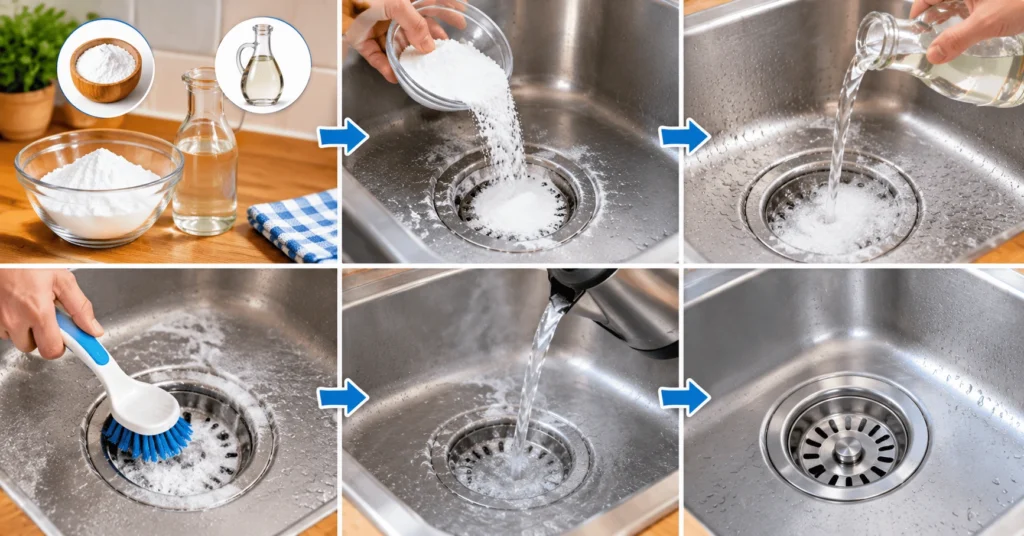
If your drain is sluggish or you just want to give your drain a quick refresher, here’s the step-by-step approach we recommend:
What You Need
- ½ cup Baking Soda
- ½ cup White Distilled Vinegar
- ½ gallon Hot Water (Use hot tap water under 140℉ / 60℃ for PVC pipes)
- A drain plug or a clean rag
Safety Warning: NEVER mix vinegar with bleach or commercial chemical drain cleaners. Combining acid with bleach produces dangerous chlorine gas.
Step-by-Step Method
- Make sure there is no water in the sink or bathtub so that the mixture can work on the drain.
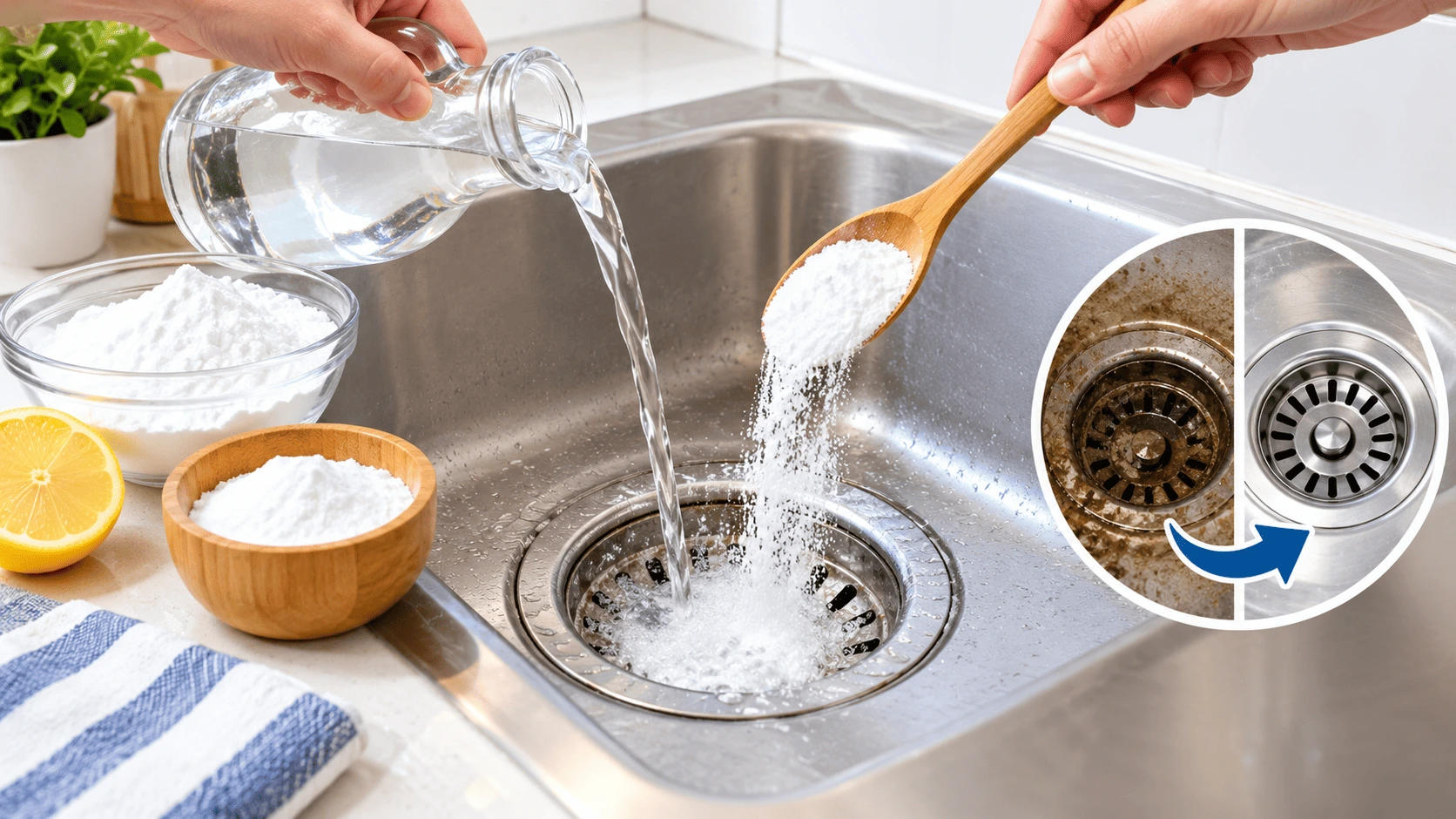
- First, pour 1/2 cup of dry baking soda into the drain.
- Secondly, pour 1/2 cup of distilled white vinegar into the drain and watch the foaming drain cleaner action begin.
- Plug the Drain: Put a stopper or a piece of cloth on the drain to prevent the foam from coming out of the drain.
- Wait 15-30 minutes for the action to take place.
- Finally, remove the plug or cloth from the drain and flush hot water down it.
How Long Should It Stay Before Flushing?
For general cleaning and refreshing purposes, the time required is 15-30 minutes.
If your sink drains slowly, then let it remain there for 15-30 minutes before flushing with hot water.
Tip: You should not leave the vinegar overnight in the pipes, since the acid will corrode the pipes and/or the rubber gaskets.
Baking Soda and Vinegar as a Natural Drain Cleaner
Using baking soda and vinegar for drains is a simple, eco-friendly method to clear minor buildup and eliminate odors without relying on harsh commercial chemicals.
Natural drain cleaner in the form of gentle foam will bubble off all the gunk present in your drains without producing any toxic gas. It is an appropriate product for the city sewers and modern plumbing systems.
But just to be informed, it is not an actual pipe cleaner.
When Vinegar and Baking Soda Will Not Work
Knowing when to stop pouring baking soda down the sink can indicate whether it’s the solution to your bigger plumbing issues. However, there are signs you should stop.
- The sink is completely clogged: don’t add more baking soda if you can’t even see water running through the drain. It’ll just turn into a slush.
- Multiple Fixture backup: If your toilet, sink, and shower are all backing up, then you most likely have a main line clog. Learn more about how to identify backup problems in this article about the main sewer line clog signs, causes, and solutions.
- Cleaning odors: If you smell a stinky odor after cleaning, the cause might be the sewer, or you might have a venting issue.
Better Alternatives When Baking Soda and Vinegar Fail
If you want to be chemical-free, here are some alternatives:
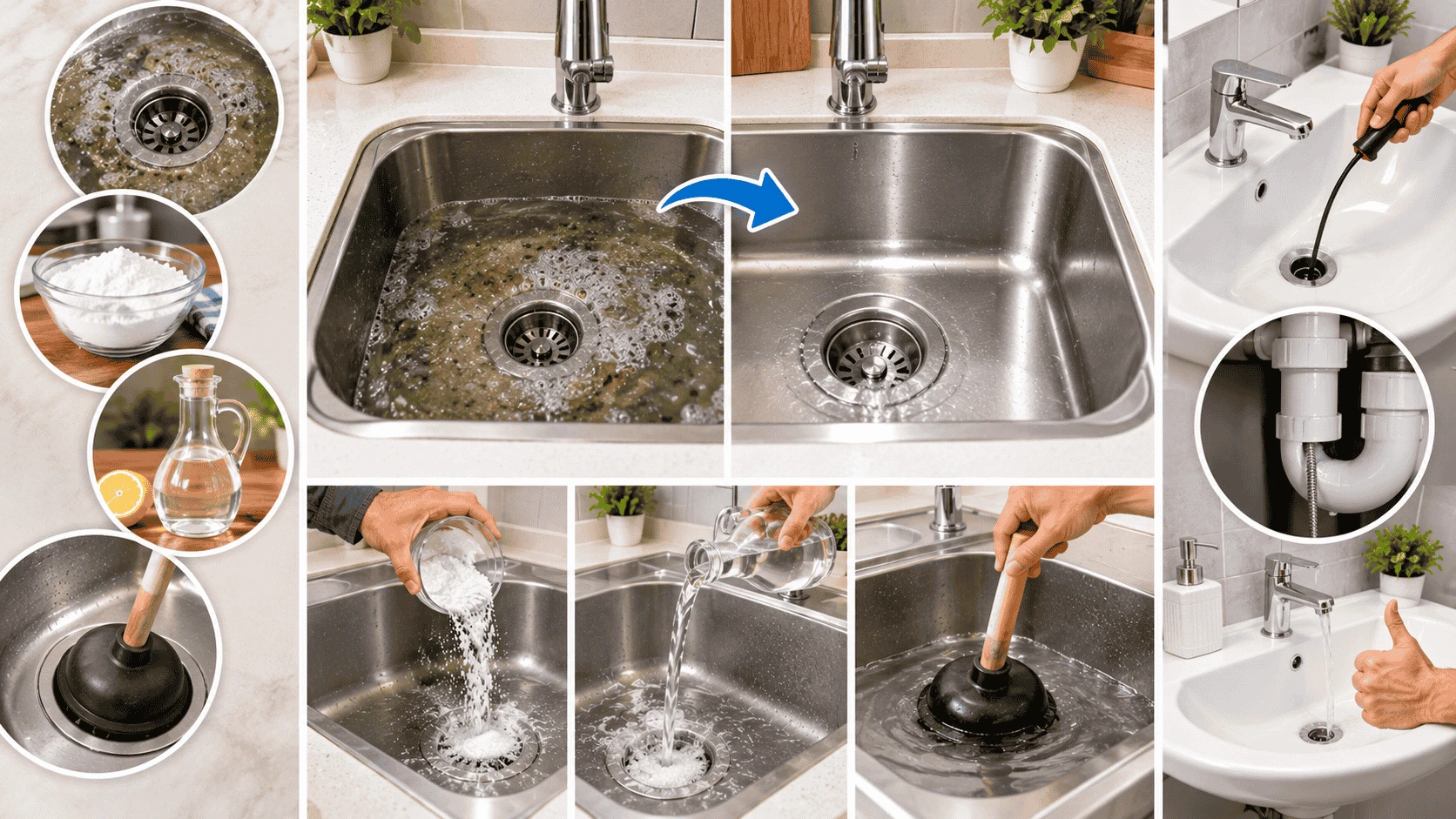
- Unclog hair clogs with the Manual Zip-It or Snake: A plastic pipe can twist around and grab hair that is trapped in the bathroom sink or shower. Read our guide on the best way to unclog a shower drain: 5 methods ranked by what works.
- Push against the tube: You can use a normal cup plunger to move minor obstructions.
- Call for a plumber for clogs: A plumber will remove the toughest or deepest clogs in your line that can be very damaging.
- High-Pressure Hydro-Jetting: High-pressure water will be used to flush hard grease and mineral deposits from pipes, and they will appear spotless.
- Drain Inspection Camera: A drain inspection uses a visual inspection of the drains for damage, root intrusion, and broken pipes. Read our complete guide on sewer line inspection: what it is, how it works, and what it costs.
Why This Popular DIY Trick Can Backfire
If you have a blocked kitchen sink, you should start by pouring some baking soda down the drain and then add vinegar so that it starts bubbling. However, let me tell you the real mechanism behind this process:
- They counteract each other: these chemicals are not meant to mix since their reaction will nullify each other. When the bubbling finishes, you will have salty liquid that will not help in dissolving the grease.
- Too much baking soda and too little vinegar can cause trouble: too much baking soda and too little vinegar can leave a residue in the pipe that may become a foamy substance that clings to hair and grease.
Frequently Asked Questions
Do baking soda and vinegar actually unclog drains?
It will help you more with the small grease buildups, soap scum, and other objects that hinder drainage in your tub and sink. However, it will not solve a huge hairball, tree root, or other solid things.
How long should I leave baking soda and vinegar in the drain?
Whenever you clean the tub or sink, you can let it sit for 15 to 30 minutes, then clean the drain with hot water to get the best results.
Can I use baking soda and vinegar in a toilet?
Yes, you can use baking soda and vinegar in a toilet, and it is safe for porcelain, but it may not have enough power to unclog your toilet and get it working again.
Is vinegar and baking soda safe for all types of pipes?
To be honest, using vinegar daily can damage older cast iron, galvanized steel, copper, and brass pipes over time.
How often should I clean my drains with baking soda and vinegar?
Doing this once a month can help prevent grease buildup and eliminate drain odors.
Conclusion: Safe for Maintenance, But Call the Pros for Heavy Clogs
You can clean drains with vinegar & baking soda once a month to clear light buildup and control bad smells. But it won’t work for severe blockages due to hair, grease, and roots. If this DIY vinegar and baking soda drain cleaner doesn’t work, do not run out and buy harsh chemicals that can ruin your pipes.
Want a drain cleaning service or inspection? Call The Plumb Hero today for professional service, including camera drain inspections and hydro-jetting.